
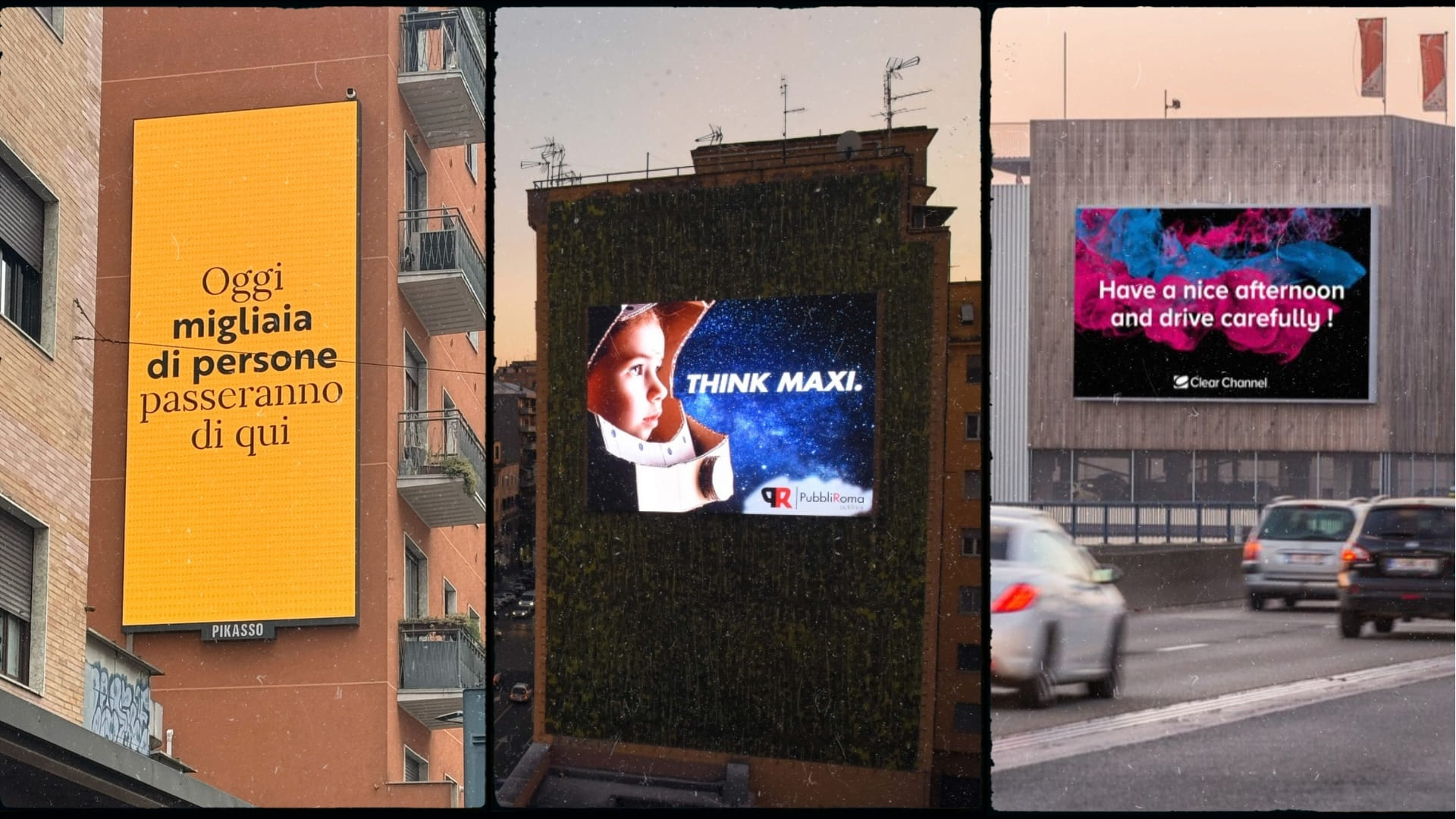
There was a time when an outdoor ad was just that — paper, ink, and a fixed message built to withstand the elements for weeks on end. Today, those same urban spaces are home to large-format, high-definition displays that can swap content in seconds, react to live weather data, and adapt to the audience standing in front of them. This is the shift we’re witnessing: the move from traditional out-of-home advertising to Digital Out-of-Home, or DOOH.
What is Out of Home advertising?
Before diving into the digital side of things, it’s worth taking a step back. Out-of-Home (OOH) advertising covers any form of commercial messaging that reaches consumers outside their homes — roadside billboards, bus shelter panels, posters in train stations, and so on. It’s one of the oldest advertising formats in existence, predating both television and the internet, and it still delivers immediate visual impact to mass audiences. The traditional strength of OOH has always been its physical presence in people’s everyday lives: hard to ignore, impossible to skip. Its weakness, however, was its rigidity. A printed message can’t be updated on the fly, doesn’t respond to context, and can’t be measured with any real precision. Those limitations are exactly what gave birth to DOOH.
The shift from traditional to digital outdoor advertising
The transition from OOH to DOOH didn’t happen overnight, and it wasn’t driven by any single breakthrough. It was the result of several technological, economic, and cultural forces converging over roughly two decades. The maturation of LED technology played a central role. Today’s new-generation displays offer:
- outstanding brightness even in direct sunlight,
- dramatically lower energy consumption,
- significantly higher resolutions,
- operational lifespan that makes them economically viable even for permanent outdoor installations.
At the same time, the rollout of high-speed connectivity made it possible to bring these panels online, paving the way for remote content management, centralized control of large screen networks spread across entire cities, and ultimately, the programmatic buying and selling of advertising space.
DOOH: the scale of a booming market
The numbers make it clear this is a structural transformation, not a passing trend. Globally, the DOOH market was valued at around $10.35 billion in 2024, with projections pointing to $23 billion by 2035 — a compound annual growth rate of roughly 8.3%. Those figures paint the picture of an industry in full acceleration.
Italy is no exception. In 2023, DOOH generated €200 million in advertising investment, up 21% year-on-year, accounting for around 32% of total outdoor ad spend nationwide, a figure that positions Italy as a mature and receptive market for this evolution. Geographically, the Asia-Pacific region leads in sheer volume, hosting over 45% of the world’s digital screens. North America stands out for the depth and maturity of its market, with a well-established ecosystem of operators, agencies, and technology providers. Europe, meanwhile, is in a phase of rapid development, with major metropolitan areas driving most of the expansion.
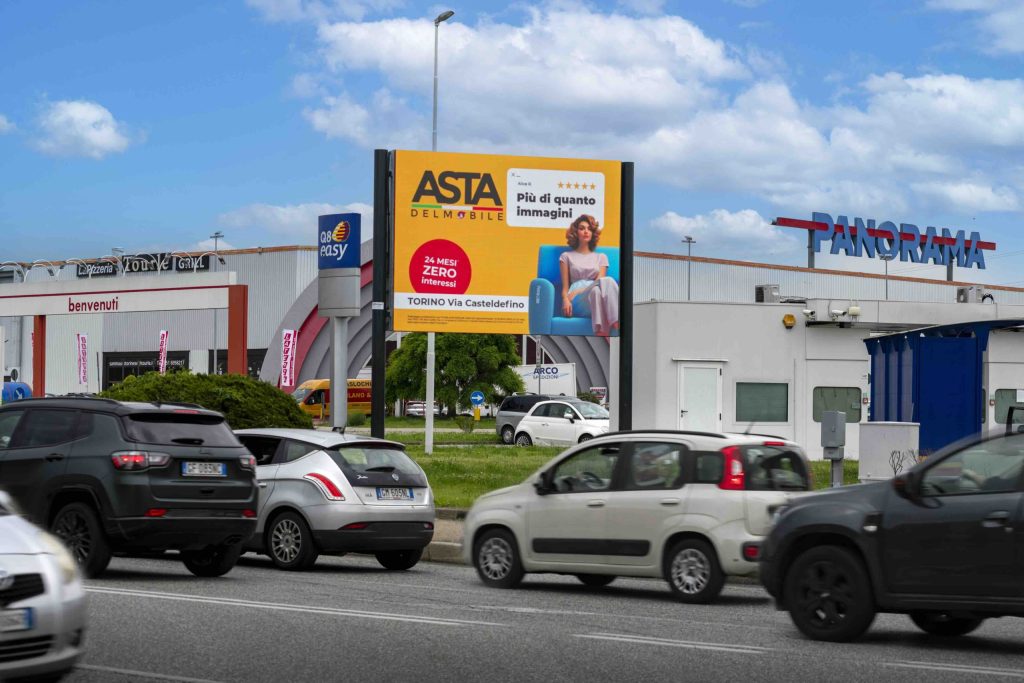
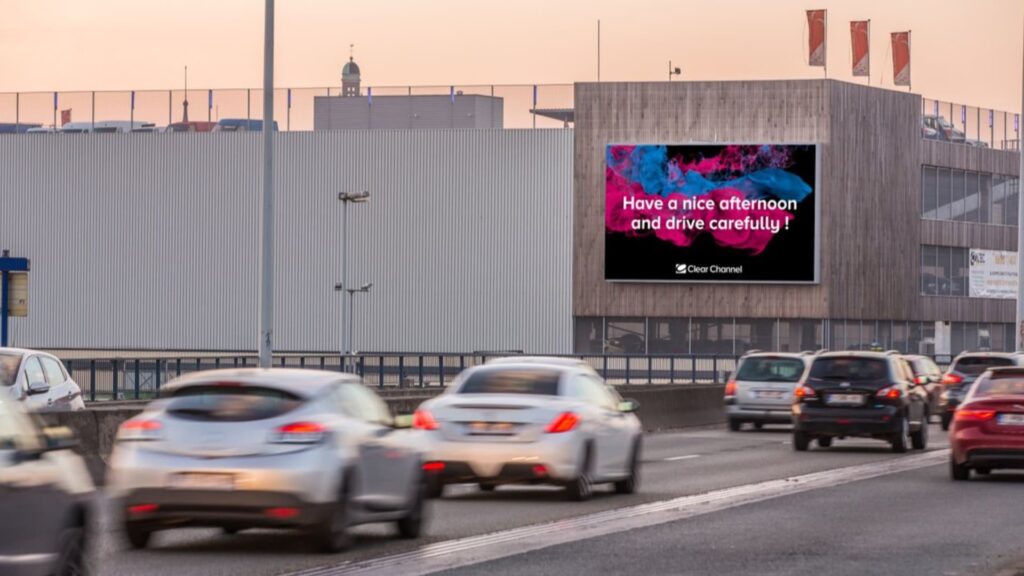

The technologies reshaping the industry
If the LED display is the hardware that makes DOOH possible, it’s the surrounding technology ecosystem that determines its strategic value for advertisers. Programmatic DOOH, or pDOOH, is arguably the most significant development of recent years. Today, more than 55% of digital outdoor inventory is traded programmatically, with ad space bought and managed through automated platforms, much like standard digital advertising online. This means a brand can push a content update across an entire screen network in under ten seconds, responding to an external trigger — a sudden heatwave, a major sporting event, a traffic spike — with no manual intervention required. The result is outdoor advertising that’s as reactive and contextually relevant as anything in the digital world.
Artificial intelligence adds another layer of sophistication. Through Dynamic Content Optimization, algorithms process demographic data, time of day, foot traffic patterns, and contextual variables to automatically serve the most effective creative at any given moment. Campaigns optimized this way have shown engagement lifts of 25% to 35% compared to static equivalents, a measurable advantage that firmly places DOOH in the category of performance media. On the visual innovation front, some notable developments are also reshaping the landscape.
- Anamorphic 3D displays now account for 12% of premium urban installations, creating glasses-free three-dimensional illusions that turn a screen into a full-blown experiential moment.
- Holographic displays go even further, capturing attention at a rate five times higher than flat screens. These are formats designed to stop people in their tracks, what marketers call a thumb-stopping moment, except here it happens on a sidewalk.
- touchless interactivity: in 2024, 18% of interactive panels worldwide adopted gesture controls or voice recognition. Originally developed in response to hygiene concerns during the pandemic, this technology has since proven its worth in sectors like healthcare and retail, where reducing physical contact with surfaces is a genuine benefit to end users.
Subway networks: the most advanced lab for DOOH
Of all urban environments, subway and metro networks have emerged as the most fertile ground for DOOH experimentation and adoption. The reason is straightforward: commuters spend an average of ten to thirty minutes inside stations, in a state of waiting that makes them particularly receptive to visual stimulation. Industry research suggests that around 70% of passengers actively engage with digital advertising in stations — an engagement rate that very few other media can match.
In Italy, Milan, Rome, and Naples are leading the charge, rolling out increasingly sophisticated installations across platforms and transit corridors. pDOOH campaigns run in these environments record engagement rates 20% higher than their static counterparts. That said, the growth of DOOH isn’t without its hurdles. Two stand out in particular.
- The first is privacy and regulation. Technologies like facial recognition and mobile ID tracking — which could massively expand DOOH’s targeting capabilities — are already restricted or banned in more than 60% of major urban markets worldwide. Over thirty countries have introduced strict regulations governing digital outdoor advertising, and the regulatory landscape continues to evolve. Operators need to navigate this carefully, leaning toward approaches based on aggregated, anonymized data rather than individual profiling.
- The second challenge is the cost barrier to entry. The upfront investment required for hardware, installation, and ongoing maintenance remains significant, which can hold back adoption among smaller businesses or slow expansion in emerging markets where local advertising demand doesn’t yet justify that level of infrastructure spend.
Trends to watch over the next decade
The future of the sector is being shaped by four major pillars. The first is environmental sustainability. The latest generation of high-efficiency LED panels can cut energy consumption by up to 65% compared to earlier technology — an argument that’s not just ethical, but financial, given how heavily energy costs weigh on the operating budgets of large-scale installations.
The second is mobile integration. The growing availability of Wi-Fi in stations and public spaces will enable hybrid experiences: a consumer exposed to a DOOH screen could simultaneously receive related content, discount codes, or product information directly on their smartphone. The line between physical and digital advertising is set to become increasingly blurred.
The third is the role of DOOH in Smart Cities. There are already 87 active projects across Asia and Europe where digital urban screens are being integrated into smart city infrastructure, serving not just as advertising surfaces but as IoT nodes for environmental data collection, traffic management, and public service communication. The fourth is the rise of Retail Media. Digital screens inside physical stores are fast becoming a standalone advertising channel, capable of serving targeted ads at the precise moment a consumer is closest to making a purchase decision. It’s the closing of the loop between message exposure and conversion, and the ROI data this format is generating is attracting an increasingly serious share of media budgets.


