
10 Advantages of DV LED Displays: Why LED Walls Outperform LCD and Other Technologies
Direct-view LED displays (DV LED) are now the most advanced technology for large-format visual communication, outperforming LCD videowalls, projectors and OLED displays in brightness, scalability and long-term performance.
Here are the key advantages that explain why LED displays are rapidly becoming the standard for both indoor and outdoor applications.
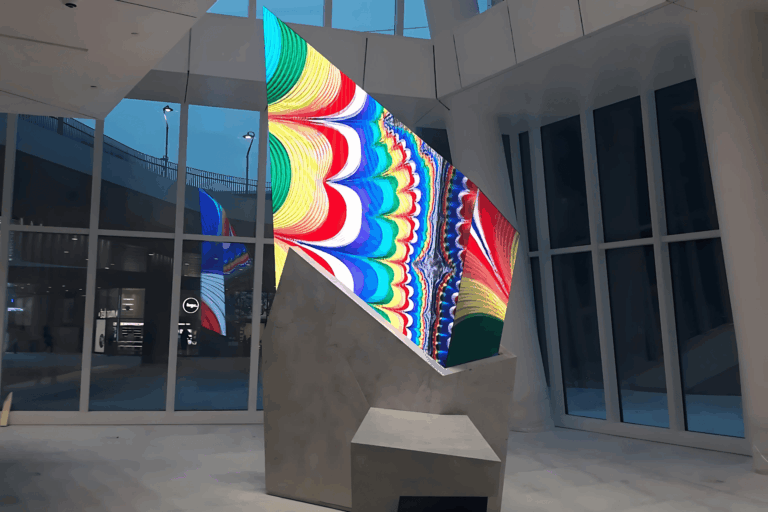
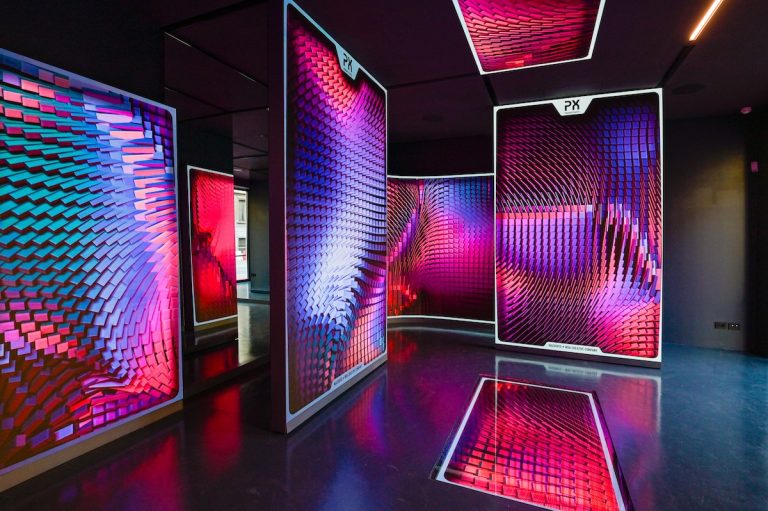
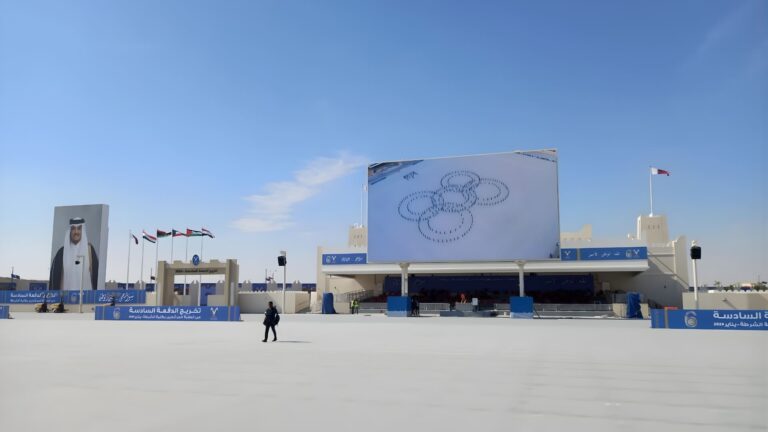
1. Unlimited Size and Shape
LED displays are fully modular and can be configured in virtually any size or shape:
- Giant billboards
- Architectural media façades
- Curved and cylindrical screens
- Creative installations such as cubes, ribbons and tunnels
Unlike LCD videowalls, LED displays have no size limitations.
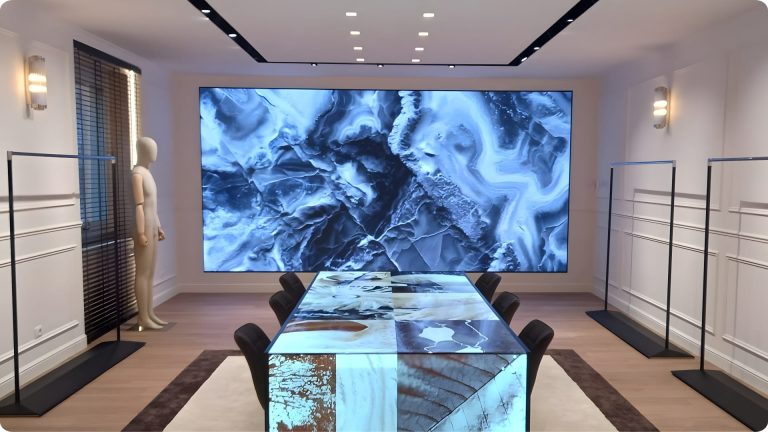
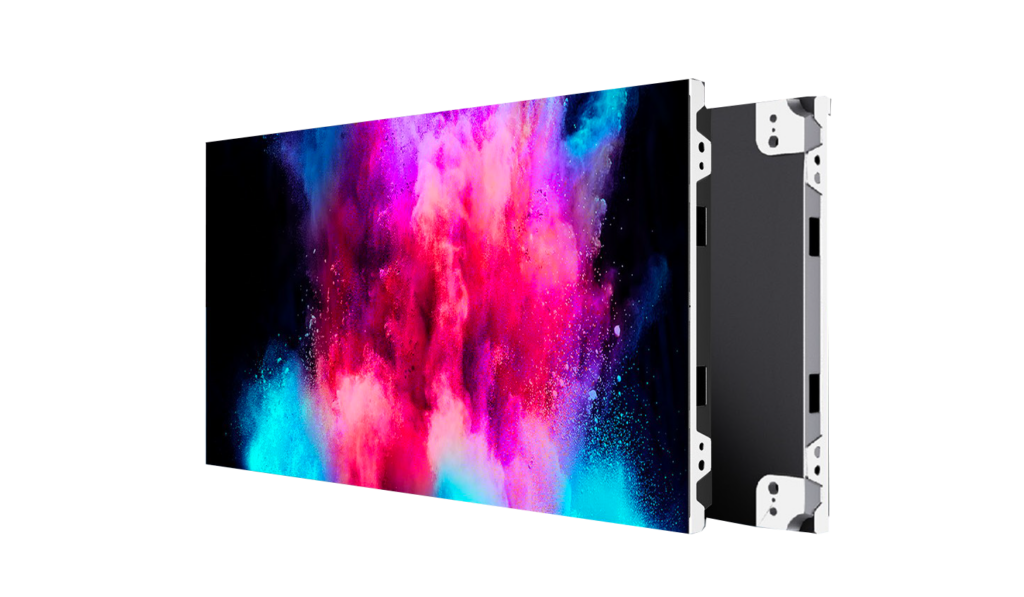
2. Completely Seamless — Zero Bezels
LED modules connect edge-to-edge with no visible gaps, ensuring a perfectly continuous surface.
- No bezels interrupting the image
- Better readability for text and data
- Higher visual impact for video content
3. Extreme Brightness for Any Environment
- Indoor: 600–1,200 nits
- Window-facing: 3,500–6,000 nits
- Outdoor: 6,000–12,000+ nits
LED displays remain clearly visible even under direct sunlight.
4. Superior Contrast, Colour and HDR Performance
- Deep black levels (especially with COB, IMD, MIP)
- Wide colour gamut and accurate reproduction
- HDR performance with high detail
- Uniform brightness across the entire display
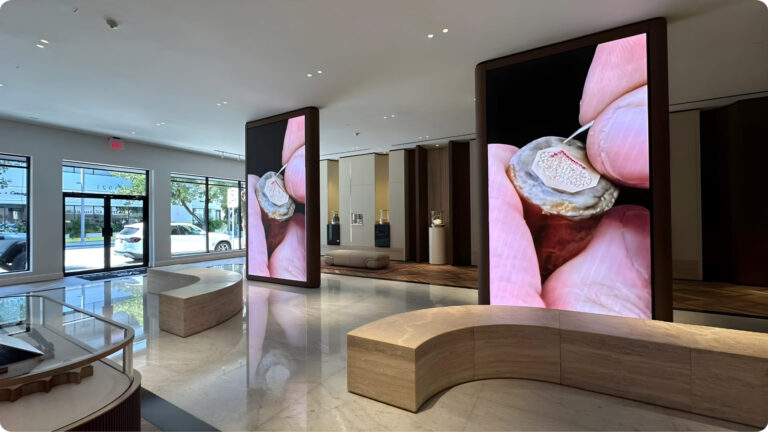
5. Any Resolution: From Billboards to UHD/8K
Resolution depends on pixel pitch, allowing LED displays to scale from large outdoor screens to ultra-high-definition indoor video walls.
- 0.7–1.2 mm – ultra-fine pitch
- 1.5–2.6 mm – retail and corporate
- 3.9–10+ mm – outdoor and large formats
Want to understand how resolution and pixel pitch affect performance?
6. Indoor and Outdoor Use — Full Weatherproof Capability
LED displays can operate in any environment:
- Indoor (corporate, retail, broadcast)
- Shop windows exposed to sunlight
- Outdoor installations with full exposure (IP65–IP66)
Other technologies require additional protection or cannot operate in these conditions.
7. Long Lifespan and Exceptional Reliability
- 80,000–100,000 hours lifespan
- Stable performance over many years
- High resistance to impact and handling
- Lower failure rates compared to LCD systems
8. Energy Efficiency and Thermal Stability
- 30–50% lower consumption vs older LED technologies
- Up to 70% savings vs LCD videowalls
- Reduced heat generation
- Automatic brightness control
Want to understand how energy efficiency impacts cost?
9. Fast Installation and Easy Maintenance
- Front or rear access
- Quick module replacement
- No need to dismantle entire structures
- Lower maintenance time and cost
10. Best ROI for Medium and Large Installations
- Longer lifespan
- Lower maintenance costs
- Higher visual impact → better performance
- Flexible use across multiple applications
LED vs LCD: why LED is the better choice
- No bezels → fully seamless display
- Higher brightness → visible in any environment
- Better durability → indoor and outdoor use
- Flexible size and shape → no limitations
- Lower long-term cost → better ROI
Conclusion
LED displays are increasingly replacing LCD videowalls and projection systems thanks to higher brightness, seamless design and superior durability.
LED displays offer unmatched flexibility, performance and long-term value, making them the preferred choice for modern visual communication.
See how LED displays are used in real-world installations.
Need help choosing the right LED display?
Contact MacroPix to identify the best solution based on your application, environment and performance goals.