
COB: the Best-Selling Technology for Indoor Narrow Pixel Pitch DV LED Displays
COB LED Technology for Fine-Pitch Indoor LED Displays
Premium Image Quality, Superior Durability and Lower Total Cost of Ownership
COB, or Chip on Board, has become one of the leading technologies for premium fine-pitch indoor LED displays. Designed for applications where image quality, reliability and long-term performance are essential, COB technology offers superior contrast, enhanced durability and excellent energy efficiency compared to traditional SMD solutions.
Early generations of COB technology presented several manufacturing and maintenance challenges. Today, however, premium COB displays have evolved significantly thanks to advanced encapsulation processes, improved black uniformity, factory colour calibration and more reliable production methods.
For many manufacturers, COB is no longer considered an emerging technology but the benchmark for premium fine-pitch indoor Direct View LED displays.
This guide explains how COB technology works, why it has become a preferred solution for professional indoor LED video walls, and how modern premium COB displays overcome many of the limitations historically associated with earlier COB products.
What Is COB (Chip on Board) Technology?
COB (Chip on Board) is an advanced LED packaging technology in which multiple LED chips are mounted directly onto the substrate instead of being individually packaged before assembly. The entire LED surface is then protected by a highly resistant encapsulation layer, creating a seamless and durable display module.
Unlike traditional SMD technology, where each red, green and blue LED is enclosed within its own package, COB integrates the LED chips directly into the module. This results in a smoother display surface, improved optical performance and greater protection against dust, moisture, impacts and electrostatic discharge.
Modern COB technology has become the preferred solution for fine-pitch indoor LED displays with pixel pitches typically ranging from 0.6 mm to 1.9 mm, where exceptional image quality, high reliability and low maintenance are essential.
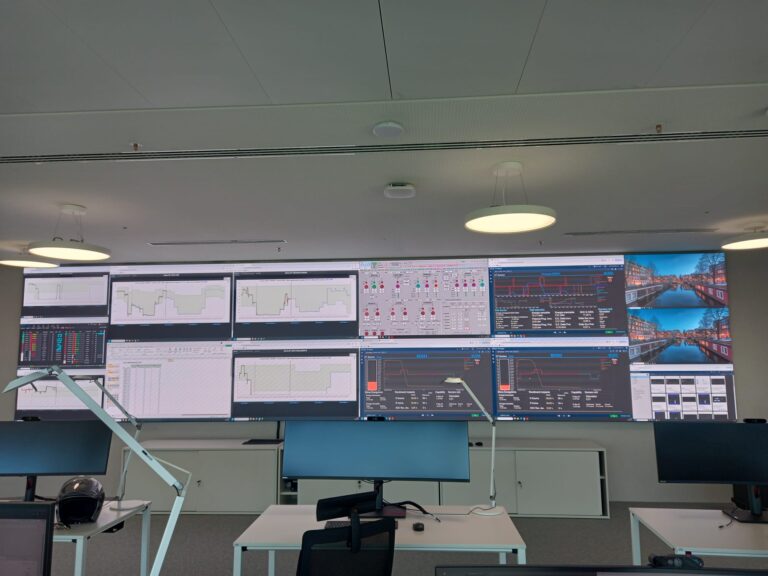
Today, COB technology is widely used in control rooms, broadcast studios, corporate boardrooms, luxury retail environments, museums and other premium indoor applications where visual performance and long-term reliability cannot be compromised.
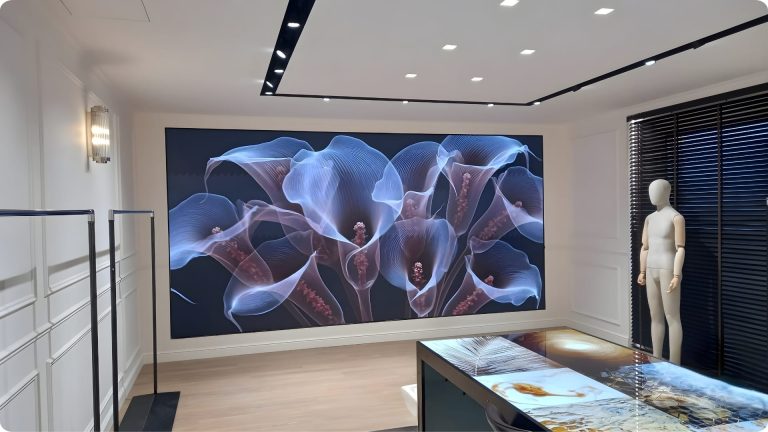
Why COB Has Become the Leading Technology for Premium Indoor LED Displays
Over the past few years, COB technology has evolved from an emerging innovation into one of the leading solutions for premium fine-pitch indoor LED displays. Continuous improvements in manufacturing processes, encapsulation materials, optical performance and quality control have significantly enhanced both reliability and visual performance.
Today, high-quality COB displays deliver exceptional image consistency, superior mechanical protection and outstanding energy efficiency, making them the preferred choice for applications where performance and long-term reliability are critical.
Unlike early generations of COB products, modern premium solutions benefit from advanced production technologies, factory colour calibration and improved black uniformity, providing an image quality that meets the expectations of the most demanding professional environments.
For these reasons, COB has become the reference technology for many corporate installations, control rooms, broadcast studios, luxury retail environments and other mission-critical applications where image quality and durability are essential.
Advantages of COB LED Technology
Exceptional Image Quality and Black Uniformity
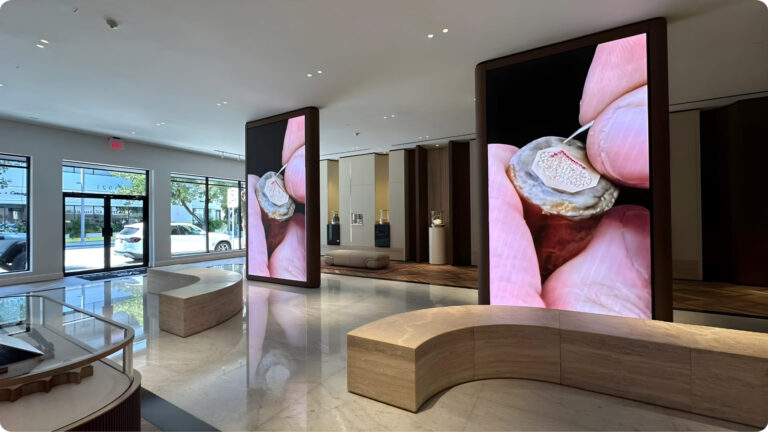
One of the main reasons for the rapid adoption of COB technology is its outstanding visual performance. Modern premium COB displays deliver exceptional contrast, deep black levels and remarkable image uniformity, creating an immersive viewing experience even in demanding professional environments.
The protective encapsulation layer provides a smooth and continuous display surface, minimizing visible LED outlines and improving the perceived uniformity of the image. Combined with advanced optical coatings, precision manufacturing and factory calibration (module by module, cabinet by cabinet and whole screen), this results in cleaner blacks, reduced reflections and a more natural visual appearance.
Today's premium COB displays also benefit from highly accurate factory colour calibration, ensuring consistent brightness, colour temperature and grayscale reproduction across the entire video wall. This level of uniformity is particularly important for control rooms, broadcast studios and corporate environments, where image consistency is essential.
Compared with earlier generations of COB technology, modern premium solutions have significantly improved black uniformity and colour consistency, overcoming many of the visual limitations that were once associated with the technology.
Superior Durability and Surface Protection
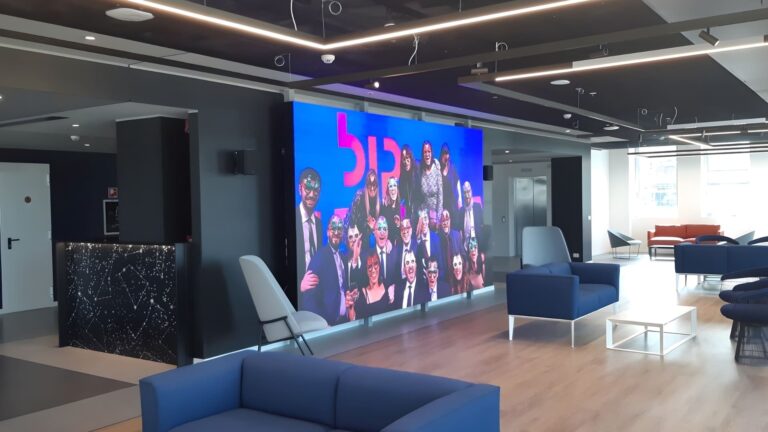
Unlike conventional SMD technology, where individual LED packages remain exposed on the surface, COB technology protects the entire display with a robust encapsulation layer. This creates a smooth, highly resistant front surface that significantly improves the display's durability in everyday operation.
Modern premium COB displays are designed to withstand accidental impacts, scratches, dust, humidity and electrostatic discharge far better than traditional LED technologies. This additional level of protection helps preserve image quality over time while reducing the risk of damaged pixels during installation, cleaning or routine maintenance.
The absence of exposed LED packages also simplifies cleaning and minimizes the accumulation of dust and contaminants, making COB displays particularly suitable for professional environments where continuous operation and long-term reliability are essential.
For corporate video walls, control rooms, museums, airports, broadcast studios and other high-traffic environments, the enhanced mechanical protection offered by premium COB technology translates into greater reliability, lower maintenance requirements and a longer operational lifespan.
Higher Energy Efficiency and Lower Total Cost of Ownership
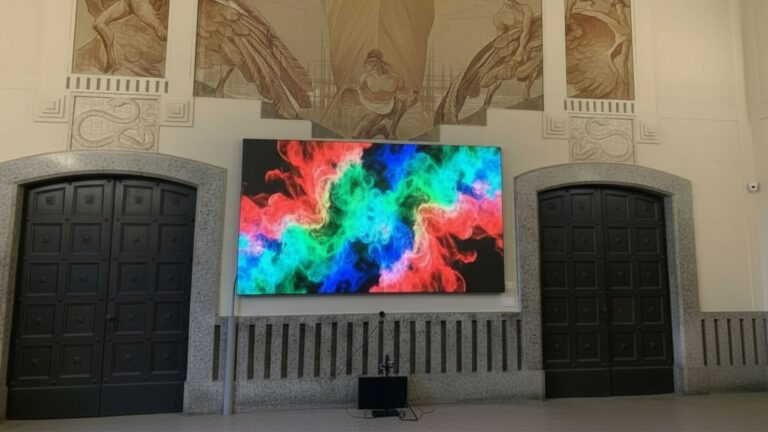
Modern premium COB technology not only delivers exceptional image quality but also contributes to lower operating costs throughout the entire lifecycle of the display. Advances in LED efficiency, thermal management and driving electronics have significantly reduced power consumption while maintaining outstanding brightness and visual performance.
Improved heat dissipation allows the LEDs to operate under more stable conditions, reducing thermal stress and helping preserve long-term reliability. Combined with enhanced mechanical protection and lower maintenance requirements, these improvements contribute to a lower Total Cost of Ownership (TCO) compared with many conventional display technologies.
For organizations operating LED video walls for extended hours each day, energy efficiency and reliability become just as important as the initial purchase price. Reduced maintenance interventions, lower power consumption and longer operational life all contribute to maximizing the return on investment.
As a result, premium COB displays are increasingly selected not only for their superior visual performance, but also for their ability to deliver long-term operational savings and dependable performance in mission-critical environments.
Learn how LED technology affects the total cost of ownership →
Where Is COB Technology the Best Choice?
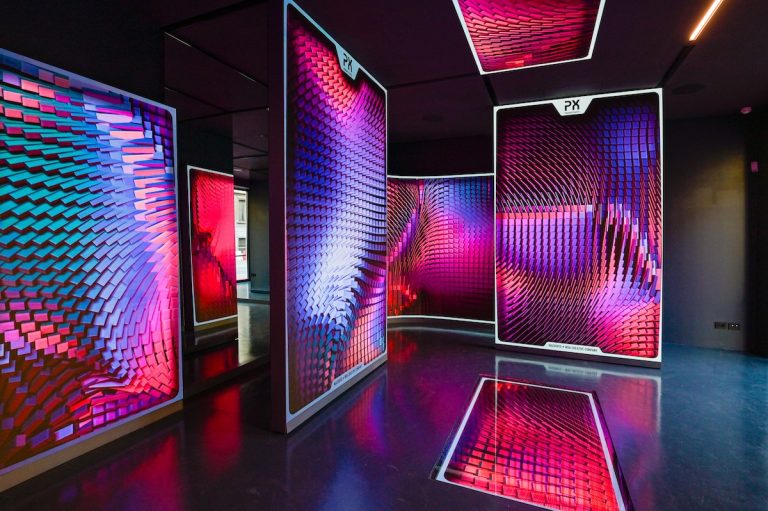
Modern premium COB technology is particularly suited to professional indoor environments where image quality, reliability and continuous operation are critical. Its combination of exceptional contrast, mechanical durability and low maintenance makes it the preferred solution for many fine-pitch Direct View LED applications.
COB technology is widely adopted in projects where displays operate for extended periods, where image consistency is essential and where minimizing maintenance is a priority.
Typical applications include:
- Control rooms and mission-critical operation centres
- Corporate boardrooms and executive meeting spaces
- Broadcast studios and television production
- Luxury retail stores and flagship showrooms
- Museums, exhibitions and experience centres
- Airports, transportation hubs and public information displays
- Universities, auditoriums and conference centres
- Premium digital signage and immersive environments
As COB technology continues to evolve, it is increasingly becoming the preferred choice for premium indoor video walls where long-term reliability, superior visual performance and low operating costs are equally important.
How Modern COB Technology Has Overcome Early Challenges
Like many emerging technologies, the first generations of COB LED displays presented several technical challenges, including manufacturing complexity, black uniformity, colour consistency and repair procedures. As a result, early COB products sometimes struggled to meet the demanding requirements of professional indoor applications.
Today, premium COB technology has evolved significantly. Continuous improvements in manufacturing processes, LED selection, encapsulation materials and quality control have transformed COB into one of the most reliable and consistent technologies available for fine-pitch indoor LED displays.
Modern premium COB displays now benefit from:
- Improved black uniformity across the entire video wall.
- Highly accurate factory colour calibration and grayscale consistency.
- Advanced encapsulation materials offering greater optical performance and durability.
- More efficient manufacturing processes with improved production consistency.
- Enhanced serviceability and maintenance procedures.
- Greater long-term reliability in continuous operation.
It is also important to distinguish between low-cost COB products and premium professional solutions. The quality of the LED chips, encapsulation process, calibration methods and manufacturing standards can have a significant impact on the final performance, reliability and lifespan of the display.
For this reason, today's premium COB technology should be evaluated based on the quality of the complete display solution rather than on perceptions formed during the early stages of COB development.
COB vs SMD: Which Technology Should You Choose?
Both COB and SMD technologies deliver outstanding image quality and are widely used in professional indoor LED displays. Rather than replacing one another, they are designed to meet different application requirements.
SMD remains an extremely versatile and cost-effective technology, particularly for pixel pitches above 2.0 mm, creative LED displays, curved installations and projects requiring maximum design flexibility.
COB, on the other hand, has become the preferred solution for premium fine-pitch video walls where superior contrast, enhanced durability, lower maintenance and long-term reliability are the highest priorities.
In general:
- Choose SMD for versatile indoor installations, creative display designs and larger pixel pitches.
- Choose COB for premium fine-pitch video walls requiring exceptional image quality, surface protection and continuous operation.
Both technologies continue to evolve, and the best choice ultimately depends on the application's technical requirements, viewing distance, operating environment and available budget.
For many premium indoor HD and UHD installations, modern COB technology has become the preferred choice thanks to its outstanding combination of visual performance, durability and lower long-term operating costs.
The Future of COB Technology
COB technology continues to set new standards for premium indoor Direct View LED displays. Ongoing advances in LED packaging, manufacturing precision, optical performance and energy efficiency are enabling even finer pixel pitches, greater image consistency and higher long-term reliability.
Future developments are expected to further improve colour accuracy, HDR performance, black uniformity and production efficiency, making COB an increasingly attractive solution for high-end corporate, broadcast, retail and mission-critical applications.
As the technology continues to mature, COB is expected to play an increasingly important role in the next generation of HD and UHD indoor LED video walls, combining exceptional visual performance with lower operating costs and simplified maintenance.
As production processes continue to improve, the gap between premium COB technology and conventional LED packaging solutions is expected to widen further.
For organizations investing in premium indoor LED displays, COB technology represents not only a state-of-the-art solution for today's projects, but also a reliable platform for the future of professional visual communication.
Discover how indoor Direct View LED technology is evolving →
Need Help Choosing the Right COB LED Display?
Every indoor LED project has unique technical and operational requirements. Whether you are designing a control room, a corporate video wall, a broadcast studio or a premium retail installation, our specialists can help you determine whether COB technology is the ideal solution for your application.
Contact MacroPix today to receive expert advice and discover the advantages of modern premium COB LED displays.