The resolution of LED displays

LED Display Resolution: Pixel Pitch, Definition and Viewing Distance

How Pixel Pitch, Screen Size and Viewing Distance Determine LED Display Resolution

Choosing the correct LED display resolution is not simply a matter of selecting the smallest pixel pitch. Unlike LCD or OLED displays, professional LED displays are modular systems, meaning that image definition depends on the relationship between pixel pitch, screen size and viewing distance.

Understanding how these three factors work together is essential to achieving the best visual performance while avoiding unnecessary costs. Selecting a finer pixel pitch than required rarely improves the viewing experience, but it can significantly increase the overall project budget.

This guide explains how LED display resolution is determined, how pixel pitch influences image quality, how viewing distance affects the perceived definition and how to choose the optimal resolution for your specific application.

Whether you are designing an indoor video wall, an outdoor billboard, a control room, a retail display or a corporate installation, understanding these principles will help you make a more informed investment and select the right LED display for your project.

The Three Factors That Determine LED Display Resolution

Unlike LCD, OLED or projection systems, LED displays do not have a fixed native resolution. Every LED display is custom-built by assembling modular cabinets, meaning that the final resolution is determined by the relationship between three fundamental parameters: pixel pitch, screen size and viewing distance.

These factors cannot be evaluated independently. Pixel pitch determines the spacing between individual pixels, screen size defines how many pixels can be installed across the display, and viewing distance determines how much detail the human eye is actually able to perceive.

This means that two LED displays with exactly the same pixel pitch may have completely different resolutions if their dimensions are different. Likewise, two displays with the same resolution may provide very different viewing experiences depending on their size and the distance from which they are observed.

Understanding how these three parameters work together is the key to selecting the correct LED display. The objective is not to achieve the highest possible resolution, but to obtain the best balance between image quality, viewing comfort and investment cost.

What Is Pixel Pitch?

Pixel pitch is the distance between the centre of two adjacent pixels, measured in millimetres (mm). It is the single most important specification in any professional LED display because it directly influences pixel density, image definition, optimal viewing distance and, ultimately, the display's overall resolution.

A smaller pixel pitch allows more pixels to be installed within the same display area, resulting in higher image detail and sharper visuals at close viewing distances. Conversely, larger pixel pitches contain fewer pixels per square metre but are perfectly suited for applications viewed from greater distances, where the human eye cannot distinguish individual pixels.

It is important to understand that a smaller pixel pitch is not always the best choice. The optimal value depends on the viewing distance, the size of the display, the type of content being shown and the available budget. Selecting an unnecessarily fine pixel pitch often increases costs without delivering any visible improvement to the audience.

For this reason, pixel pitch should never be evaluated in isolation. It must always be considered together with screen dimensions and viewing distance to determine the most suitable LED display resolution for a specific application.

How to Calculate LED Display Resolution

Calculating the resolution of a LED display is relatively simple once you know the screen dimensions and the pixel pitch. Because LED displays are modular and have no fixed native resolution, the total number of pixels depends on the physical size of the display.

The calculation is performed by dividing the screen dimensions by the pixel pitch (expressed in the same unit of measurement).

Horizontal Resolution = Screen Width ÷ Pixel Pitch
Vertical Resolution = Screen Height ÷ Pixel Pitch

For example, consider a LED display measuring 3.60 × 2.025 metres with a 1.875 mm pixel pitch.

  • Screen width: 3,600 mm ÷ 1.875 mm = 1,920 pixels
  • Screen height: 2,025 mm ÷ 1.875 mm = 1,080 pixels

The resulting resolution is therefore 1920 × 1080 pixels (Full HD).

This example demonstrates why LED display resolution depends on both pixel pitch and screen dimensions. Changing either parameter automatically changes the final resolution of the display.

Many professional LED displays are intentionally designed around standard resolutions such as Full HD (1920 × 1080), 4K (3840 × 2160) or 8K (7680 × 4320). This often influences both the cabinet layout and the final screen dimensions.

However unlike LCD or OLED displays, LED displays are not limited to standard resolutions such as Full HD, 4K or 8K. One of their greatest advantages is the ability to create custom resolutions by simply adjusting the display dimensions and the number of pixels.

This flexibility allows designers to optimize the display for the available installation space rather than adapting the installation to the limitations of a fixed-format screen. Curved video walls, ultra-wide displays, ribbon boards and large architectural installations often use custom resolutions specifically designed for the project.

The only requirement is that the video processing hardware, control system and content are configured to support the chosen resolution. When properly designed, a custom-resolution LED display delivers the same image quality while making full use of the available space.

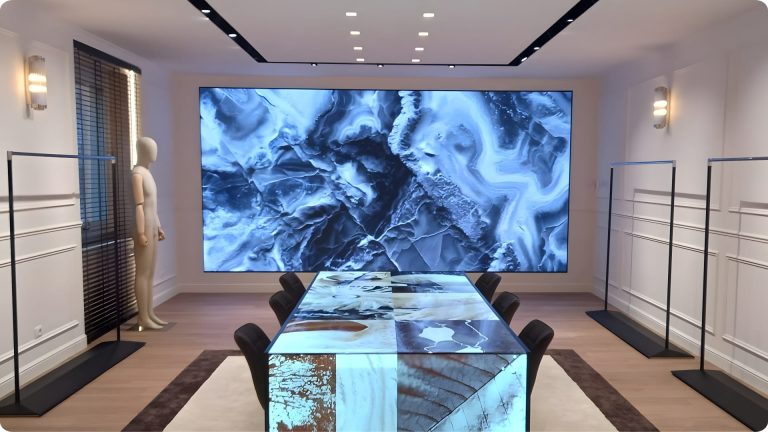
VCU 4K 1.2 mm SMD led display

How Screen Size Affects LED Display Resolution

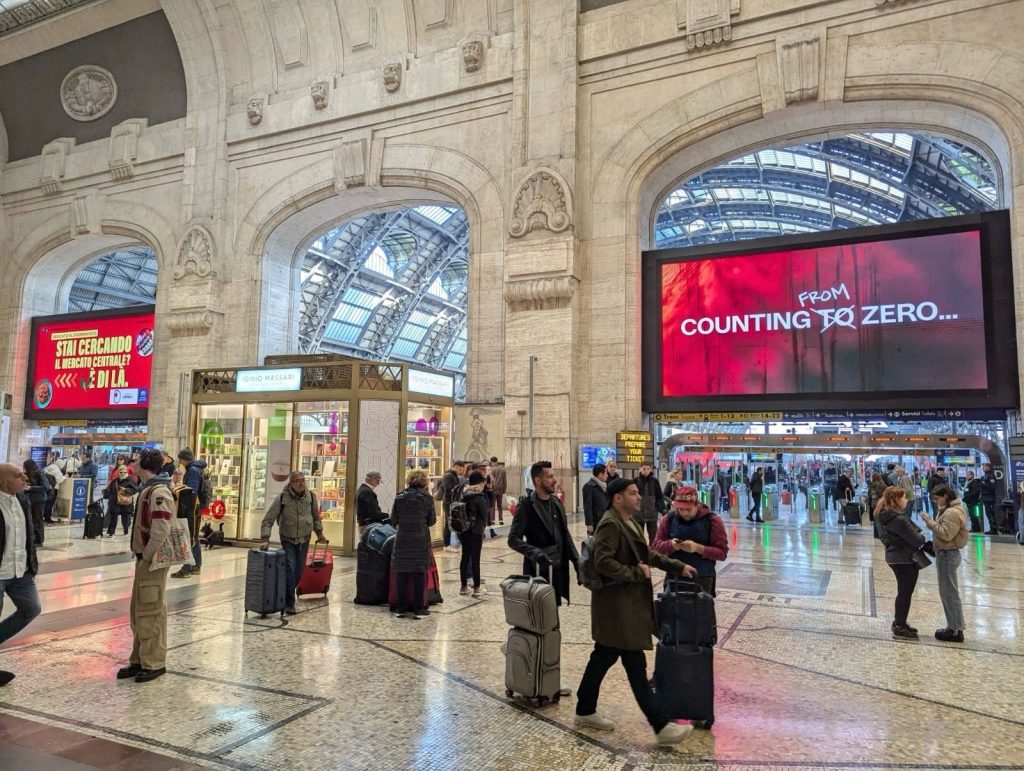
ledwall stazione

Unlike LCD and OLED displays, professional LED displays do not have a fixed screen size or native resolution. Because they are built from modular cabinets, their dimensions can be customized to fit virtually any installation, from small corporate video walls to giant stadium displays.

For a given pixel pitch, increasing the physical size of the display automatically increases the total number of pixels, resulting in a higher overall resolution. Conversely, reducing the display size decreases the available pixel count, even if the pixel pitch remains exactly the same.

This means that two LED displays with the same pixel pitch can have completely different resolutions simply because their dimensions are different. For example, a 220-inch LED display with a 1.2 mm pixel pitch may achieve approximately 4K resolution, while a significantly larger display using the same pixel pitch can exceed 8K resolution.

When designing a LED display, screen size should therefore be considered together with pixel pitch and viewing distance. Optimizing these three parameters allows the display to deliver the desired image quality without unnecessary costs or excessive resolution.

How Viewing Distance Affects Perceived Resolution

Viewing distance is one of the most important factors when selecting the correct LED display resolution. While pixel pitch and screen size determine the physical resolution of the display, the distance between the viewer and the screen determines how much of that resolution can actually be perceived.

The human eye has a limited ability to distinguish fine details. As viewing distance increases, individual pixels become progressively less visible, meaning that extremely fine pixel pitches provide little or no additional visual benefit beyond a certain point.

For example, a premium 0.9 mm LED display may produce outstanding image quality when viewed from one or two metres away. However, at a viewing distance of ten metres, most viewers will perceive virtually no difference between a 0.9 mm and a significantly larger pixel pitch, making the higher-resolution solution unnecessarily expensive.

For this reason, the objective should never be to select the smallest available pixel pitch. Instead, the ideal solution is the one that provides the required image quality at the expected viewing distance while optimizing the overall investment.

The best pixel pitch is not the smallest one—it is the one that matches the viewing distance of your audience.
Pixel PitchMinimum Viewing Distance
0.7–1.2 mm1–2 m
1.5–1.9 mm2–4 m
2.5–3.1 mm4–8 m
3.9–4.8 mm8–15 m
6.6–10 mm15–40+ m

Not sure which LED display is right for your project?

Learn how to choose the right LED display →

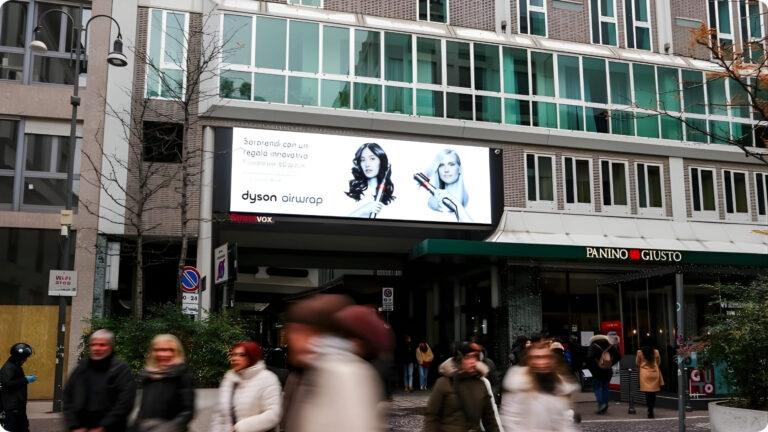
rooftop adv led wall

Typical Pixel Pitch Ranges for Indoor and Outdoor LED Displays

Recommended pixel pitch varies significantly depending on whether the LED display is installed indoors or outdoors. Indoor applications typically require finer pixel pitches because viewers are much closer to the screen, whereas outdoor displays are generally observed from greater distances and can therefore use larger pixel pitches without compromising image quality.

Although every project should be evaluated individually, the following ranges represent the most common professional applications.

Typical Indoor Pixel Pitch

  • 0.7–1.2 mm – Executive boardrooms, control rooms, broadcast studios and premium corporate environments requiring ultra-high definition.
  • 1.2–1.9 mm – Corporate meeting rooms, retail, museums, universities and high-end digital signage.
  • 2.5–3.9 mm – Auditoriums, conference rooms, houses of worship and large indoor public spaces.

Discover which indoor LED display solutions are best suited for your application..
Explore Indoor LED Displays →

Typical Outdoor Pixel Pitch

  • 1.2–2.9 mm – Premium shop windows, luxury retail façades and close-range outdoor installations.
  • 2.9–4.8 mm – Digital Out of Home (DOOH), shopping centres, commercial buildings and urban advertising.
  • 6.6 mm and above – Large billboards, sports venues, transport infrastructure and long-distance viewing applications.

Discover which outdoor LED display solutions are best suited for your application.
Explore Outdoor LED Displays →

Common Mistakes When Choosing Pixel Pitch

Selecting the right pixel pitch is one of the most important decisions in any LED display project. However, many purchasing decisions are based on common misconceptions that can increase costs without improving the viewing experience.

The most common mistakes include:

  • Choosing the smallest available pixel pitch instead of selecting the one that matches the actual viewing distance.
  • Confusing pixel pitch with resolution. Resolution depends on both pixel pitch and the physical dimensions of the LED display.
  • Ignoring viewing distance when comparing different LED display solutions.
  • Designing for exceptional viewing conditions instead of the typical distance from which the audience will watch the display.
  • Focusing only on image quality without considering budget, operating costs and the overall return on investment.
  • Assuming that a higher resolution always produces a better display, regardless of the installation environment or application.

The best LED display is not the one with the highest resolution, but the one that delivers the right balance between image quality, viewing distance, screen size and investment cost.

Need Help Selecting the Right LED Display Resolution?

Every LED display project is unique. The ideal resolution depends on the relationship between pixel pitch, screen size, viewing distance and the intended application. Choosing the right combination ensures outstanding image quality while avoiding unnecessary costs.

Our specialists can help you determine the optimal LED display configuration based on your project requirements, compare alternative solutions and recommend the pixel pitch that provides the best visual performance and return on investment.

Contact the MacroPix team to identify the ideal LED display resolution for your next project.