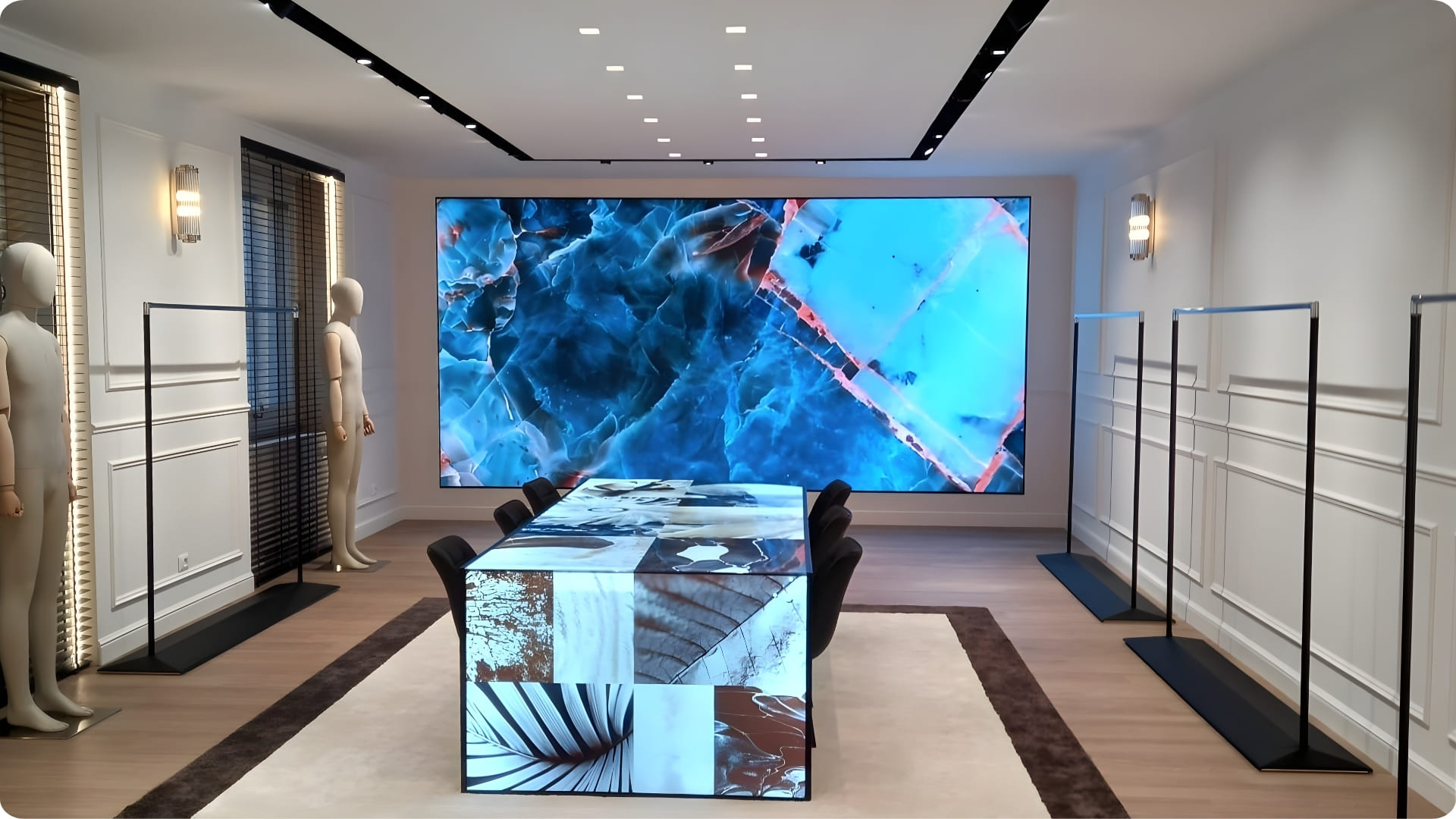
Digital Signage: What It Is, How It Works, and Why It’s Strategic for Businesses
Digital signage is now one of the most effective visual communication tools available to businesses. Thanks to its ability to display dynamic content that can be updated in real time, digital signage has transformed the way brands, retailers, hospitality businesses, and companies communicate with their audiences.
In this article, we explore what it is, how it works, what its key components are, and why you should consider it an integral part of your communication strategy.
What is digital signage?
Digital signage is a visual communication system that uses digital displays (LCD, LED, and OLED screens, interactive kiosks, and video walls) to deliver multimedia content. This content is managed, scheduled, and updated using dedicated software, which is often accessible remotely via the internet. Unlike traditional signage (which is static, costly to update, and limited in its expressive capabilities), digital signage allows messages to be modified in real time, content to be customized based on context (time, location, audience), and its effectiveness to be measured. It is a versatile tool, suitable for both small businesses and large corporate networks spread across multiple locations.
The global digital signage market is growing steadily, driven by falling hardware costs, technological advances in displays, and a growing awareness among businesses of the importance of the visual experience at customer touchpoints.
Key components of a digital signage system
A digital signage system is not comprised of a single element, but rather an ecosystem of hardware and software components that work together seamlessly. Understanding each component is essential for designing an effective and scalable solution.
Display or monitor
Displays are the visible heart of any digital signage system: they are the screens on which content is displayed. They can be:
- Professional monitors (LCD, OLED) designed for continuous use, even 24/7, with high brightness and optimized viewing angles.
- Video walls: sets of screens synchronized to form a single large image, ideal for creating maximum visual impact in large spaces such as lobbies, shopping malls, or airports.
- LED totems: freestanding vertical screens, often touchscreens and interactive, used at information kiosks, hotels, showrooms, and stores.
- LedWall: high-brightness modular LED displays, perfect for large indoor and outdoor spaces, events, and striking architectural installations.
The choice of display depends on the installation environment, viewing distance, and communication objectives.
Media player or control computer
The media player is the device that “feeds” content to the screen. It can be a chip integrated directly into the display (System-on-Chip, SoC), a small dedicated computer connected to the monitor, or a more powerful external player capable of handling high-resolution content (4K, 8K) or complex video walls. The choice of media player affects playback smoothness, the ability to handle multichannel content, and compatibility with CMS software. For enterprise installations or mission-critical environments, it is essential to opt for industrial players with a high level of reliability and technical support.
Il software di gestione dei contenuti (CMS)
The CMS (Content Management System) for digital signage is the brain of the entire system. It is the software platform—often accessible via a browser or app—that allows you to:
- Caricare e organizzare i contenuti (video, immagini, presentazioni, feed RSS, stream live).
- Schedule content based on specific times, days of the week, or events.
- Remotely manage one or more display networks spread across multiple locations.
- Monitor the status of players and receive alerts in case of malfunctions.
- Collect data on content exposure and user interactions (in interactive systems).
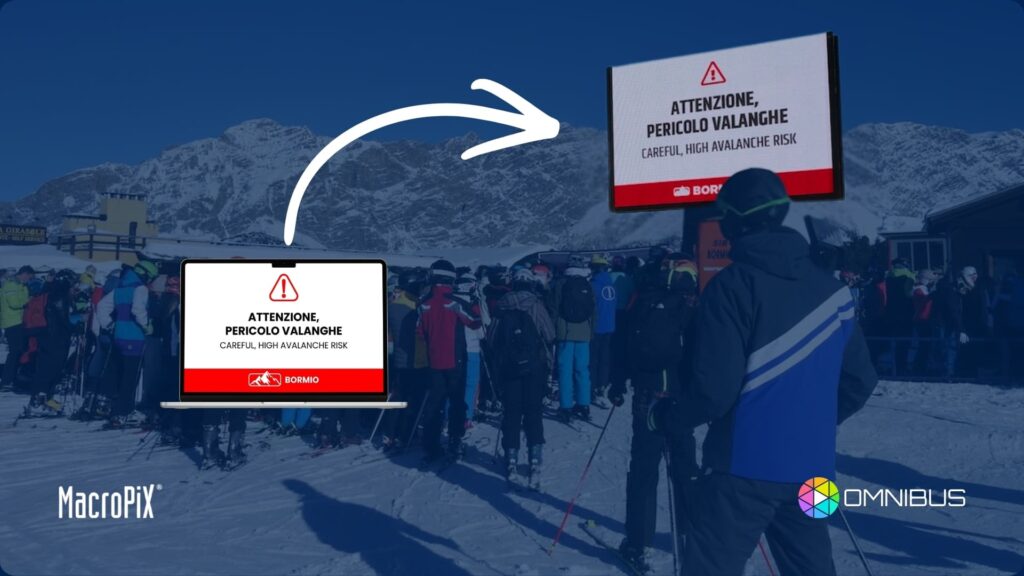
The market offers cloud-based, on-premise, or hybrid CMS solutions, with widely varying levels of complexity and cost. The choice depends on the size of the network, the level of customization required, and the company’s IT policies. Macropix has developed its own extensively tested, high-performance, and highly efficient software platform capable of managing large networks of digital displays. Omnibus ensures both broad versatility and cost-effectiveness. For more information on Macropix’s digital signage software, visit the official Omnibus website.
Digital content
Without effective content, even the best hardware and software aren’t enough. Digital content is the lifeblood of digital signage and must be designed to capture attention within seconds. The main types include:
- Promotional videos for brand awareness campaigns, product launches, or special offers.
- Digital menu boards for restaurants, bars, fast-food restaurants, and hotels, with real-time updates.
- Internal company communications, such as company news, HR messages, and team goals.
- Real-time business KPIs to keep teams informed about performance.
- Information and wayfinding signage for airports, hospitals, and university campuses.
- Social media feeds and live updates for events, conferences, and showrooms.
How the digital signage system works
The operation of a digital signage system is simpler than you might think. The user or marketing team uploads content to the CMS, sets the schedule, and publishes it. The software sends the content to the media players over a network (the internet or a LAN), and the players display it in sync on the connected screens. The workflow can be summarized in five steps:
- Content creation: graphics, videos, and presentations are produced in-house or outsourced to a creative agency.
- Upload to the CMS: Files are uploaded to the content management system and organized into playlists or campaigns.
- Scheduling: This involves determining when, where, and for how long each piece of content will be displayed.
- Distribution: The CMS sends content to players over the network; in offline (standalone) mode, content is downloaded locally and can be played even without an active connection.
- Monitoring and optimization: We analyze performance and update content based on the results or operational needs.
The Benefits of Digital Signage for Businesses
Investing in a digital signage system offers tangible and measurable returns in several areas:
- Reduced printing costs: Eliminating posters, brochures, and other printed materials significantly reduces operating costs in the medium to long term.
- Real-time updates: prices, offers, schedules, or emergency messages can be updated in seconds from anywhere.
- Greater visual engagement: Moving content captures attention up to five times more effectively than static content, increasing message recall.
- Contextual personalization: Content can vary based on the time of day, season, weather, or even the audience’s profile, thanks to sensors and artificial intelligence.
- Scalability: A single platform manages networks ranging from 2 to 2,000 screens with the same ease of operation.
- Sustainability: less paper, less ink, less transportation (digital signage helps reduce a company’s environmental impact).
Where can digital signage be used?
I LED Wall si distinguono per livello di risoluzione e luminosità, rappresentando vantaggi concreti rispetto alla comunicazione tradizionale. Il digital signage trova applicazione in praticamente ogni settore produttivo e di servizio. Ecco i principali contesti di utilizzo.
Retail and Large-Scale Retail
In modern retail, digital signage has taken on a central role in shaping the in-store experience. Stores use it to create atmospheres that align with their brand positioning, promote seasonal campaigns, and instantly communicate new product releases and availability. In an environment where customers often arrive already well-informed, the store must offer something more: emotion, context, and inspiration.
From a retail perspective, displays placed near products or in waiting areas increase cross-selling opportunities and encourage impulse purchases, directly impacting the average transaction value. The ability to update content centrally and in real time also allows retailers to quickly align in-store communications with ongoing campaigns, price changes, or available inventory.
Montecore
Madrid Airport
Airports and train stations
At airports and train stations, digital signage is first and foremost a critical infrastructure: its primary function is to provide real-time information on schedules, gates, and platforms, integrating with traffic management systems to ensure automatic and consistent updates across all displays. This is complemented by wayfinding—essential in large environments frequented by an international audience—and emergency communications management, for which displays must be able to interrupt any content with absolute priority.
From a technical standpoint, reliability and readability in bright light are non-negotiable requirements. Finally, waiting areas offer a significant advertising opportunity, which must be carefully balanced against their informational function, which always takes priority.
Hospitality
In the hospitality industry, digital signage operates on two complementary levels: the operational level, with the flexible management of menus, prices, and communications about services and events; and the experiential level, where welcome screens, displays in common areas, and entertainment content contribute to the atmosphere and the guest’s emotional connection with the property.
The ability to tailor content by time of day—from breakfast to dinner—adds further relevance to the messaging, while each display becomes an active touchpoint that reinforces the brand’s identity and enhances the overall perception of the guest’s stay or visit.
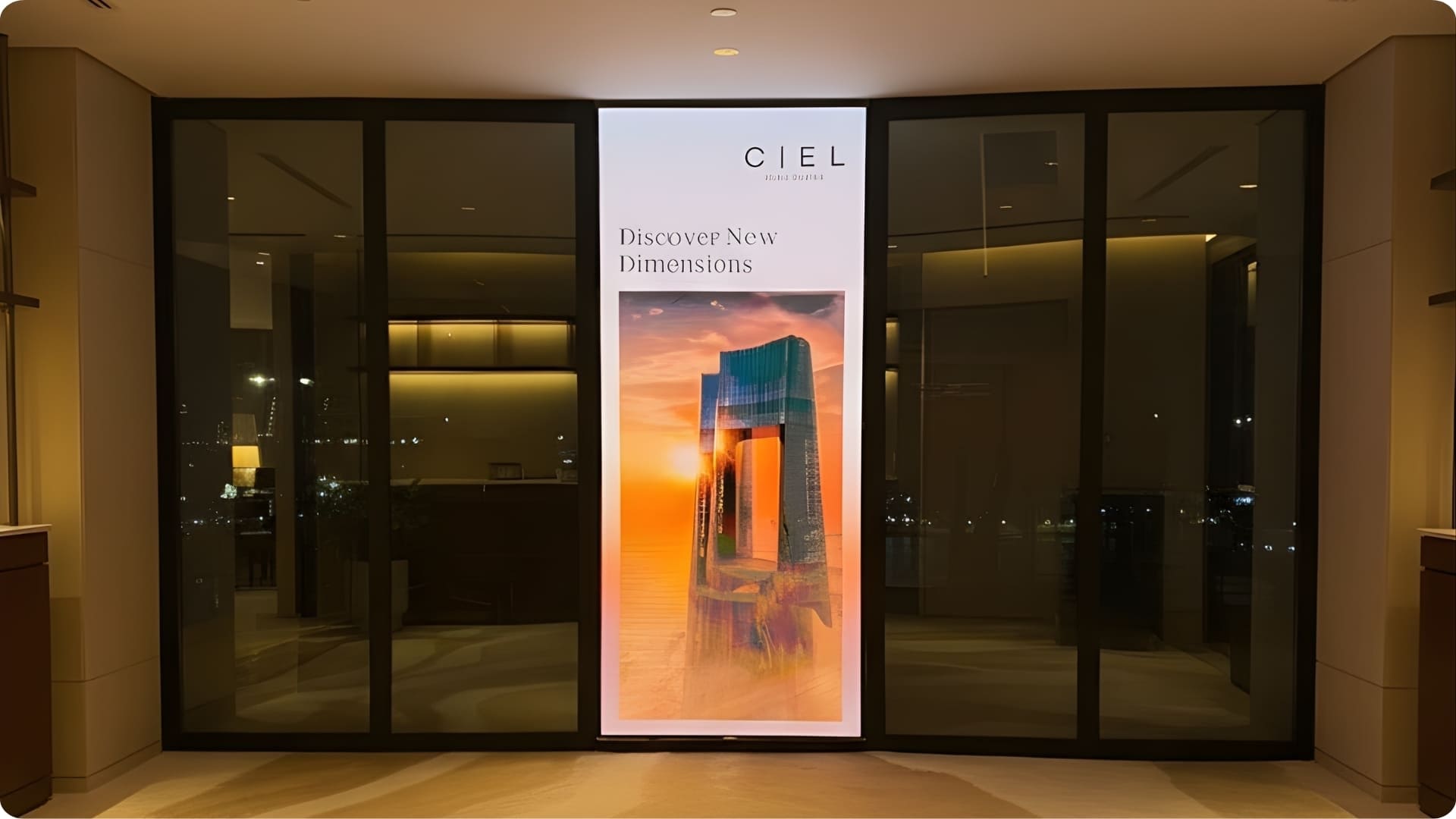
Ciel Dubai Marina
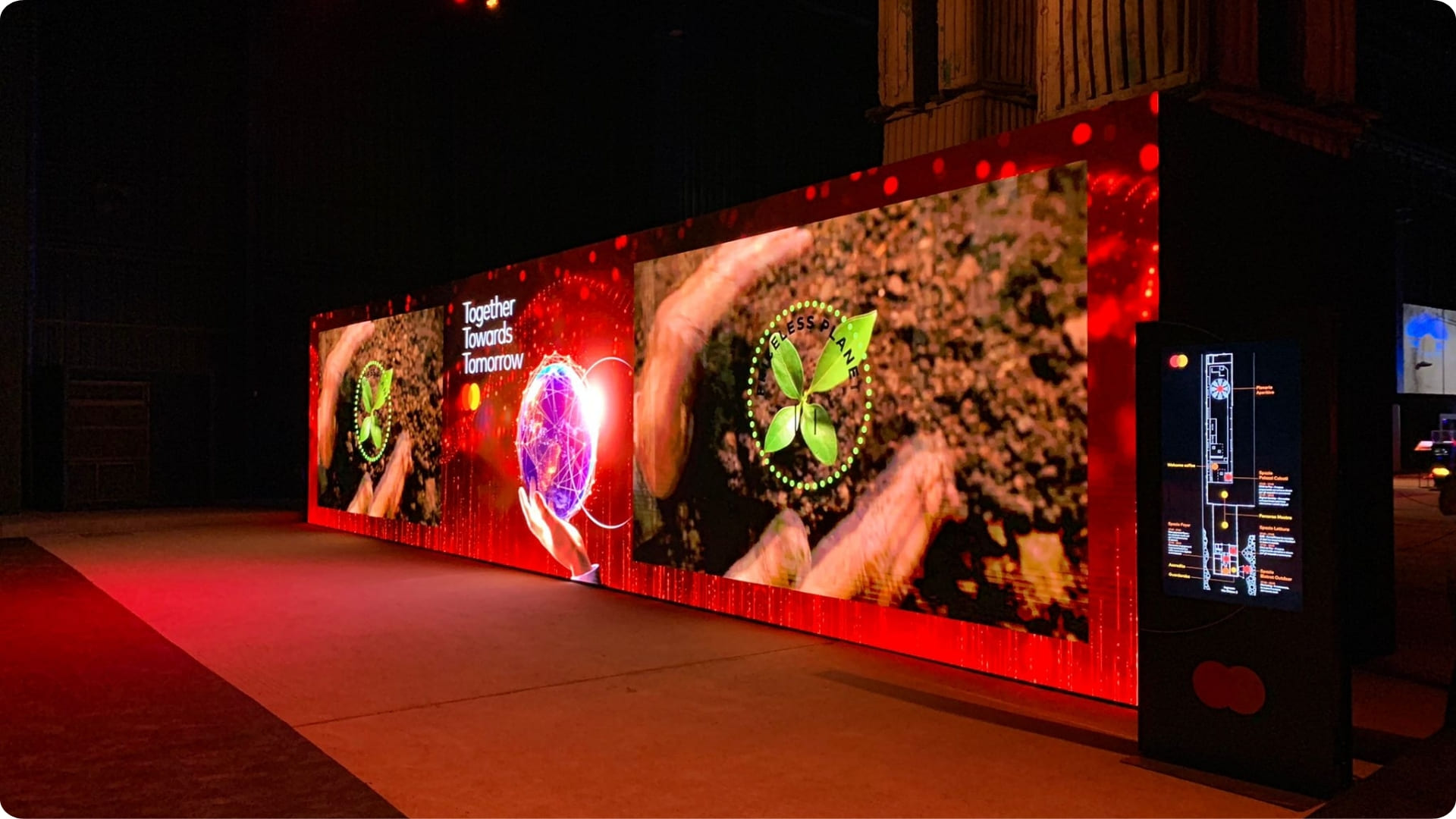
Mastercard
Events and Trade Shows
In the world of events and trade shows, digital signage must combine operational effectiveness with visual impact in temporary, high-intensity settings. LED displays, video walls, and digital kiosks serve multiple functions simultaneously: they guide the public through the venue, communicate schedules and real-time updates, and provide sponsors and exhibitors with high-quality visual surfaces for branded and immersive content.
Interactivity adds another layer of value, transforming displays into effective tools for lead generation and engagement. Finally, the modularity of LED systems is the key enabler of all this, allowing for custom installations that are quick to set up and take down, suitable for settings of any scale.
Companies and offices
In corporate settings, digital signage is establishing itself as a tool for internal communication even more than for branding. In production areas, real-time KPI displays create a shared understanding of work progress and facilitate rapid responses to critical issues. In hallways and common areas, displays keep staff informed about news, objectives, and procedures without interrupting the workflow.
At reception areas, welcome screens reinforce the brand identity from the very first point of contact with visitors and guests, while digital meeting room management eliminates day-to-day organizational friction by optimizing space utilization. The result is a more connected work environment, where people, data, and corporate communication interact continuously and seamlessly.
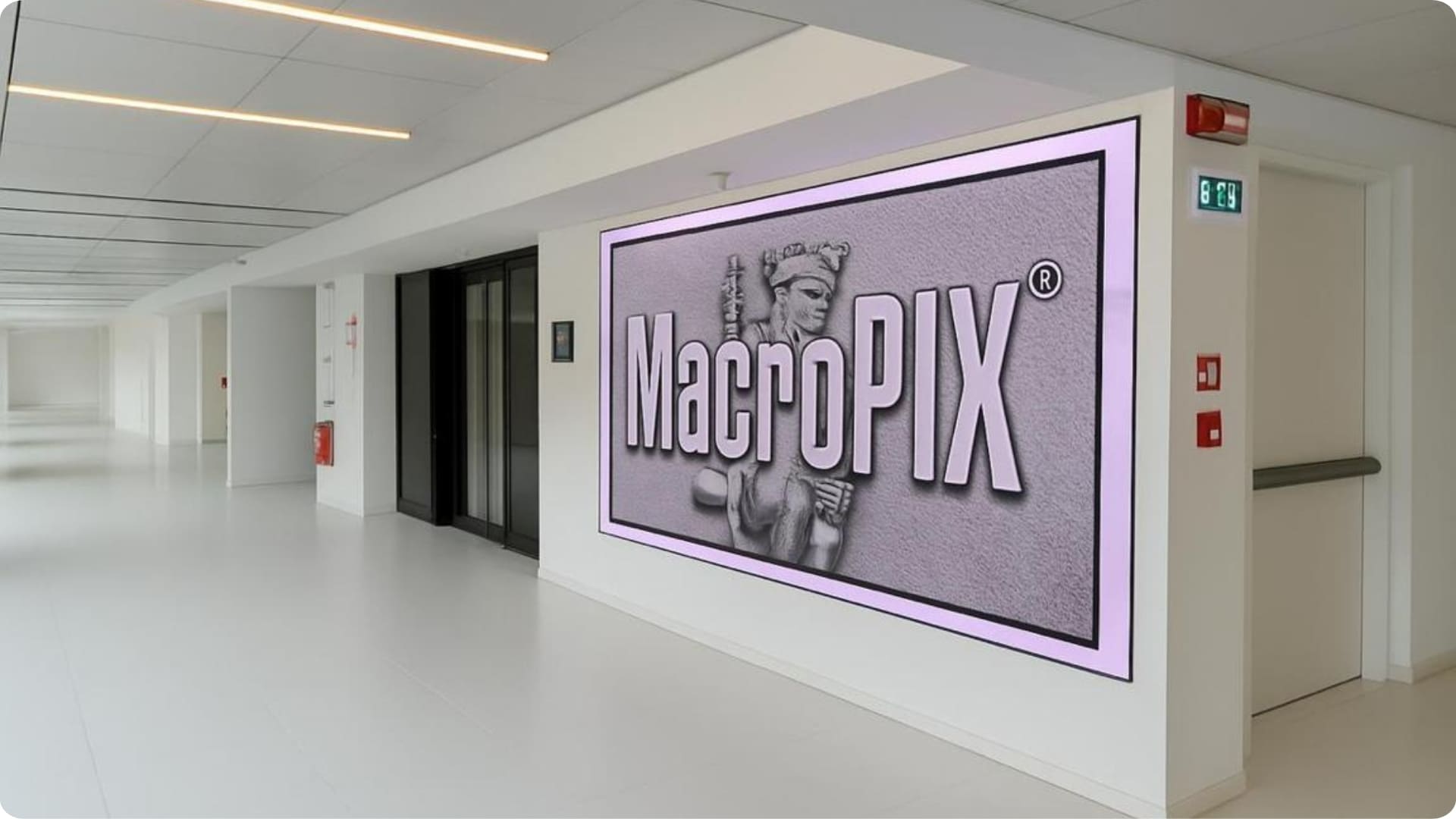
Scientific tech house
Euroma 2
Shopping malls
In shopping centers, digital signage stands out for its dual nature: it serves as both a service tool and a source of revenue. On the service side, interactive wayfinding guides visitors through complex, multi-level facilities with constantly updated information—all without the costs associated with physical signage. On the commercial side, the displays highlight the offerings of the stores, create ambiance during seasonal events, and transform the mall into an experiential destination.
The real distinguishing feature, however, is the advertising component for third-party brands: digital spaces in a high-traffic mall have a value comparable to that of a premium outdoor format, and—when managed using digital-out-of-home strategies—they generate direct revenue for the operator, transforming digital signage from an infrastructure cost into a revenue-generating asset.
Sport
In stadiums and sports arenas, digital signage is establishing itself as a tool for entertainment and communication even more than for simply providing information. On the main screens, real-time displays of the score, game statistics, and replays create a shared sense of engagement that amplifies the audience’s emotions and transforms every moment of the game into a memorable experience.
In the hallways, at the ticket counters, and at the entrance turnstiles, the displays guide fans along their entire route, keeping them updated on schedules, events, and promotions seamlessly and in real time.
In reception and hospitality areas, welcome screens reinforce the club’s identity during the first point of contact with guests, sponsors, and officials, conveying the team’s values and history with high-quality visual impact. Digital management of advertising communications optimizes the spaces dedicated to sponsors and generates revenue throughout the event. The result is a more connected ecosystem where fans, data, and sports communication interact continuously and seamlessly.
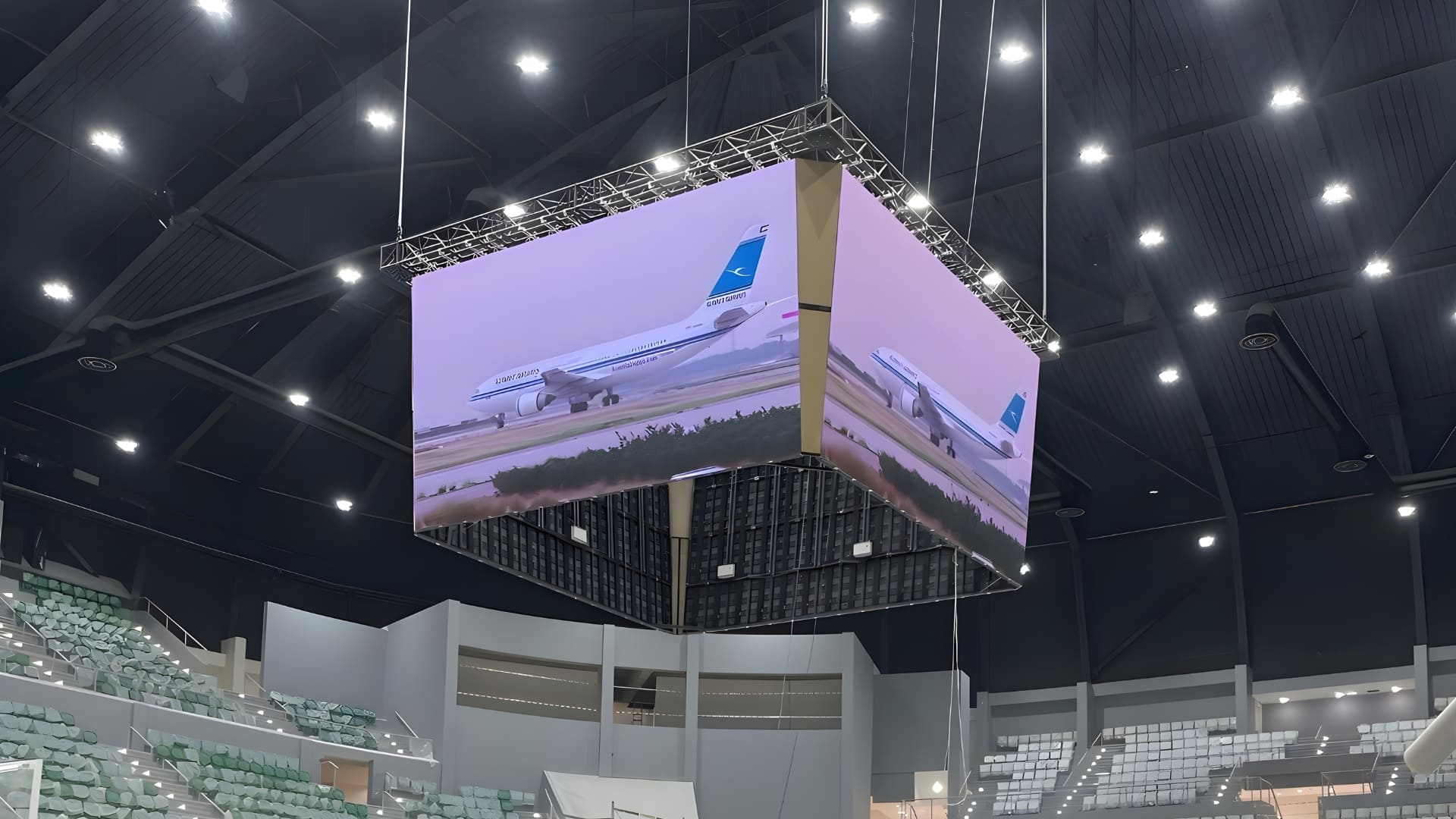
Sports Arena in Kuwait
Digital Signage Indoor vs Outdoor
The distinction between indoor and outdoor solutions is crucial during the design phase, as environmental conditions have a significant impact on the technical specifications of the displays.
- Indoor displays operate in controlled environments, with brightness typically ranging from 300 to 700 nits. They can be LCD, LED, or OLED, depending on the budget and the required visual quality. Attention should be paid to the quiet operation of the cooling system and to how well the display blends in with its surroundings.
- Outdoor displays, on the other hand, are exposed to direct sunlight, humidity, dust, extreme temperatures, and, in some cases, vandalism. For this reason, they require:
1. High brightness (minimum 2,500 nits, up to 10,000 nits for use in direct sunlight).
2. IP65 or higher protection against water and dust.
3. Anti-glare tempered glass to ensure readability even in conditions of strong backlighting.
4. Active cooling systems to prevent overheating.
Outdoor LED walls are often the most effective solution for large outdoor surfaces thanks to their modularity, inherent brightness, and the absence of glare-related issues.
How to choose the right digital signage solution
Choosing the digital signage system that best suits your needs requires a thorough preliminary analysis. Here is a practical checklist to help you get started:
1. Indoor or outdoor environment? Is the space well-lit with natural light? Are temperature and humidity controlled?
2. Space dimensions: How large is the area to be covered? Do you need a single screen, a video wall, or a distributed network?
3. Viewing distance: How far away is the audience from the display? (This affects the screen size and pixel pitch in the case of LED walls.)
4. Communication objectives: To inform, promote, entertain, or guide? Static, dynamic, or interactive content?
5. Budget: What is the available budget for hardware, software, installation, and maintenance? Is there a plan for future network expansion?
By partnering with a specialized provider like Macropix, you’ll receive personalized consulting—from design and installation to after-sales support—optimizing your investment and ensuring maximum system performance over time. For more information, contact us.
Digital Signage FAQs
Below is a list of the most frequently asked questions we receive from companies and professionals who are new to the world of digital signage.
How much does a digital signage system cost?
The cost of a digital signage system varies widely and depends on numerous factors: the type and number of displays, the quality of the media player, CMS software (monthly subscription or perpetual license), installation and cabling, and staff training. A basic setup with a single professional screen and cloud-based software can start at just a few hundred euros per month on an “as-a-service” basis, while a multi-site enterprise network with a video wall and a customized CMS can involve investments of several tens of thousands of euros. Requesting a preliminary technical analysis is always the recommended starting point.
What is the difference between digital signage and a video wall?
Digital signage is the overall system of digital visual communication, which includes hardware, software, and content. A video wall, on the other hand, is a specific type of display consisting of multiple screens arranged side by side and synchronized to form a single large image. In other words, a video wall is one of the possible components of a digital signage system, not a synonym for it.
Do you need an internet connection for digital signage?
Not necessarily. There are systems that operate in standalone mode: content is preloaded into the media player’s memory and played on a loop even without a network connection. An internet connection, however, is essential for real-time remote management, updating content from a cloud-based CMS, displaying live data (weather, stock markets, social media feeds), and monitoring device status.
Can the monitors run 24/7?
Yes, but only if they are professional monitors designed for this purpose. Consumer displays (such as those purchased at a typical electronics store) are not designed for continuous use and deteriorate quickly when left on for extended periods. Professional digital signage displays are built with highly durable components, advanced heat dissipation systems, and features such as automatic brightness adjustment, all specifically designed to operate without interruption.
How long does a professional display last?
A professional digital signage display has an average operational lifespan of 50,000–100,000 hours of operation, equivalent to approximately 5–11 years of continuous 24/7 use. LED panels generally have a longer lifespan than LCDs, with a more gradual decline in brightness (half-life) over time. Proper maintenance, proper installation, and adherence to operating environmental conditions significantly contribute to extending the system’s useful life.
Macropix specializes in the design and manufacture of LED display solutions for digital signage. Contact us for a personalized consultation and find out which solution best suits your needs.
A comparison of the two formats
LED display
- Content update
- Visual impact
- Flexibility
- Cost over time
- Sustainability
Traditional signage
- Content update
- Visual impact
- Flexibility
- Cost over time
- Sustainability
Hardware solutions for Digital Signage
IMAGINIS
SIGNUM
MOBILIS
FLEXILIS
CRIUS
AERIS
FASCIA-I
FASCIA-O
Software solutions for Digital Signage
Omnibus
Omnibus is the result of Macropix’s many years of experience in the digital signage industry. Reliable, scalable, and intuitive, the software is suitable for a variety of applications and offers a comprehensive solution focused not only on content management and playback, but also on energy efficiency and advanced system control.
Contact us
For personalized advice