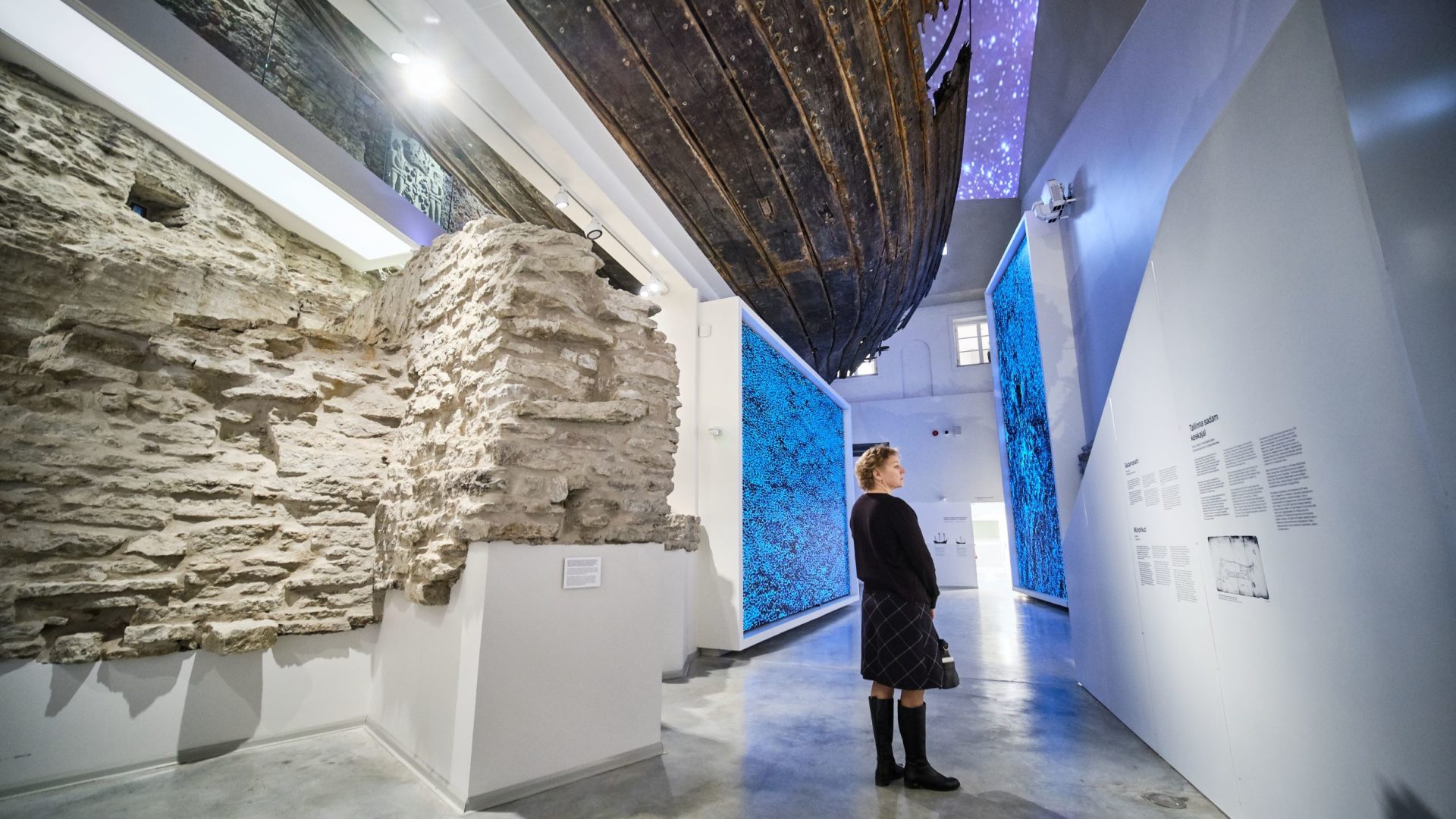
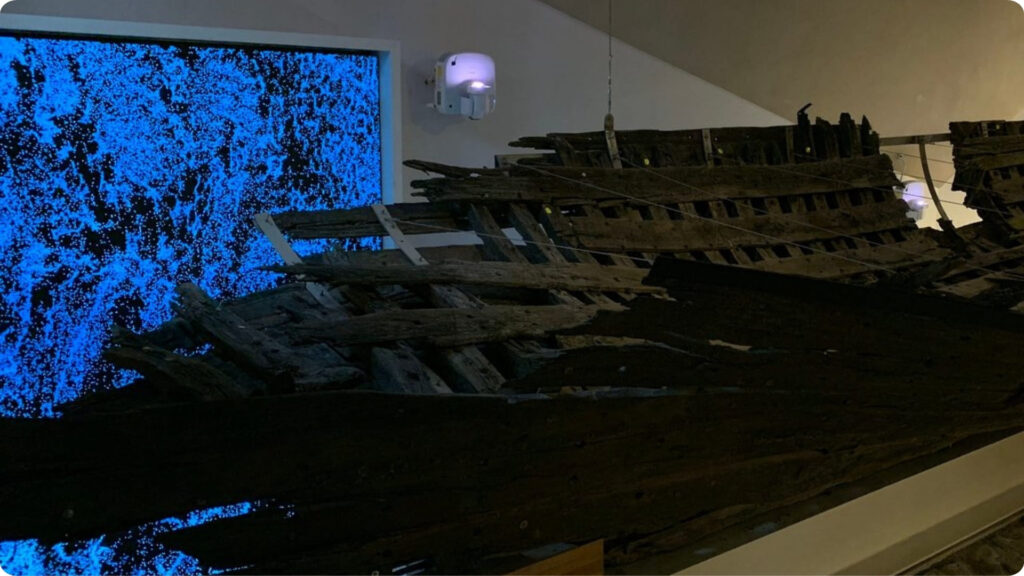
At Tallinn’s Eesti Meremuuseum in Estonia, Macropix has crafted an extraordinary union of medieval maritime heritage and cutting-edge digital storytelling. Suspended within the legendary Lennusadam seaplane hangar, a monumental 1917 structure, the wooden skeleton of a 14th-century Lootsi cog emerges like a ghostly shipwreck, surrounded by an enveloping LED screen installation that transforms the museum experience into something truly mesmerizing.
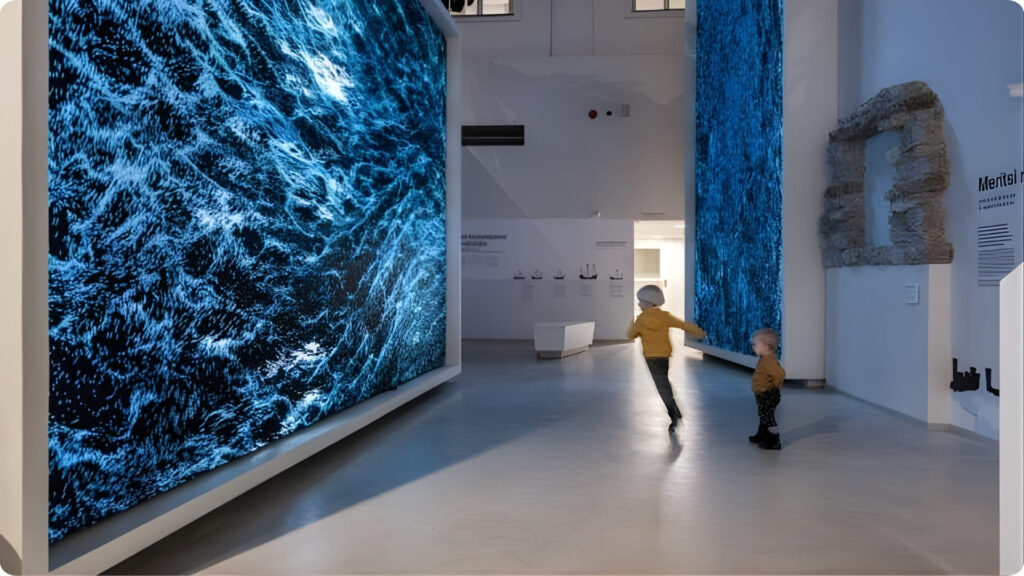
This isn’t simply a display; it’s a portal. Deep blue LED panels pulse with dynamic underwater scenes—swaying seaweed, mysterious currents, and the play of light through water—creating an immersive submarine atmosphere that brings visitors face-to-face with the Baltic’s medieval trading past. The contrast is breathtaking: weathered stone walls and authentic archaeological debris on one side, towering vertical LED screens dominating the space on the other, while carefully positioned spotlights reveal every aged texture of the centuries-old timber.
For the art and cultural sector, this installation demonstrates how LED technology can revolutionize storytelling in museum environments. Rather than competing with historical artifacts, the digital displays enhance them, creating emotional connections that static exhibitions simply cannot achieve. Visitors don’t just observe history, they step inside it. The technology enables dynamic narratives of Baltic commerce and medieval storms to unfold in real-time, transforming educational content into an unforgettable multisensory experience that resonates with contemporary audiences while honoring Estonia’s rich maritime legacy. This is experiential design at its finest: where 700 archaeological artifacts, authentic ship remains, and state-of-the-art DOOH technology converge to create a space that inspires wonder, curiosity, and deep engagement with cultural heritage.
Technical excellence in a historic setting
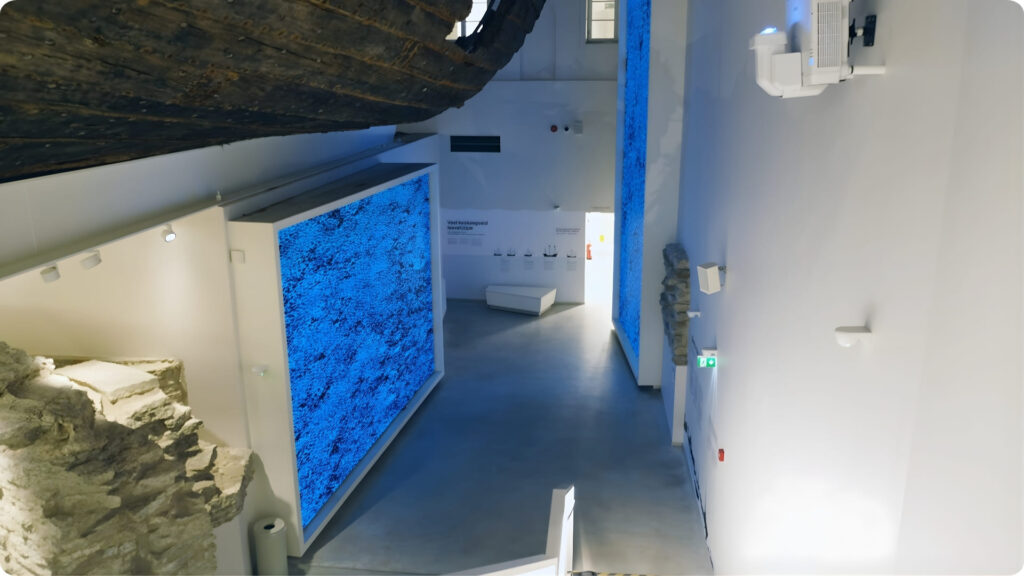
The Eesti Meremuuseum installation showcases Macropix’s expertise in integrating advanced LED technology within sensitive cultural environments. Located in Tallinn’s iconic seaplane hangar, this project required both technical precision and architectural sensitivity to complement rather than overwhelm the museum’s historical significance. The LED system wraps around the suspended cog ship structure, creating a seamless digital ocean that appears to flow through the exhibition space. The fluid animations maintain perfect visual coherence across multiple panels, delivering crisp underwater imagery that remains stunning from every viewing angle within the hangar. Visitors can walk around the installation, experiencing different perspectives as the digital seascape interacts with the physical artifact at the center.
Key project specifications:
- Location: Eesti Meremuuseum, Lennusadam seaplane hangar
- City: Tallinn, Estonia
- Product: LED screen
- Series: Mobilis-FT
- Pixel pitch: 2.6 mm
- Application sector: Art & Cultural Heritage
- Environment: Indoor museum installation
The 2.6 mm pixel pitch ensures exceptional image clarity, crucial for displaying the intricate details of underwater environments—from the delicate movement of marine vegetation to the subtle gradations of light penetrating water depths. This level of detail creates the illusion of actual submersion, transporting museum visitors into the Baltic Sea of centuries past. The installation’s success lies in its ability to function as both a dramatic visual centerpiece and an educational tool, demonstrating how modern LED technology can breathe new life into historical narratives while respecting the authenticity and integrity of priceless cultural artifacts.
Product used: Mobilis-FT
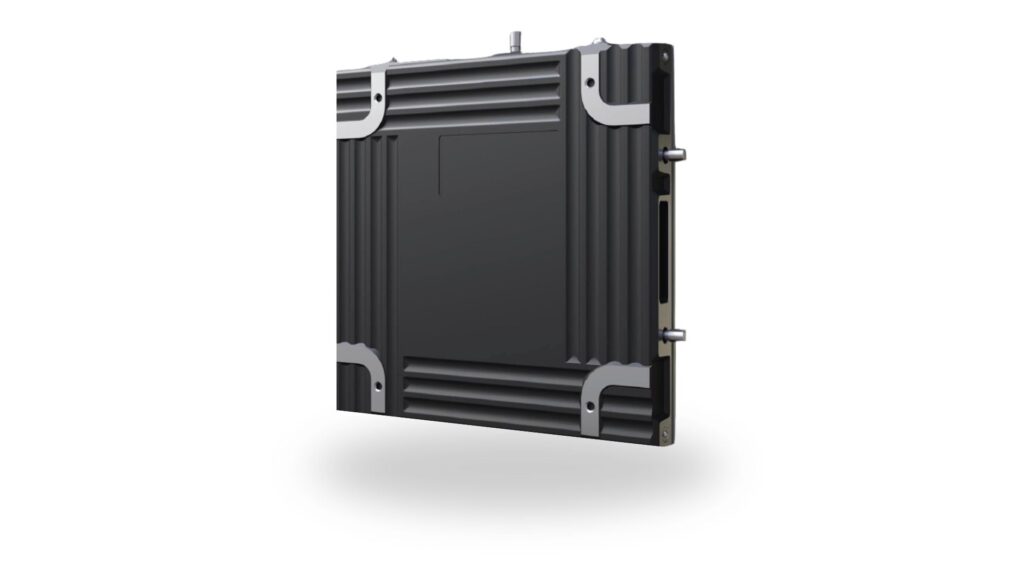
At the core of this transformative installation lies the Mobilis-FT LED system—a product engineered specifically for indoor environments where aesthetic elegance meets functional excellence. For museum curators, architects, and cultural institutions seeking impactful visual solutions without technical complexity, the Mobilis-FT represents the ideal balance of innovation and accessibility.
Creative freedom without boundaries
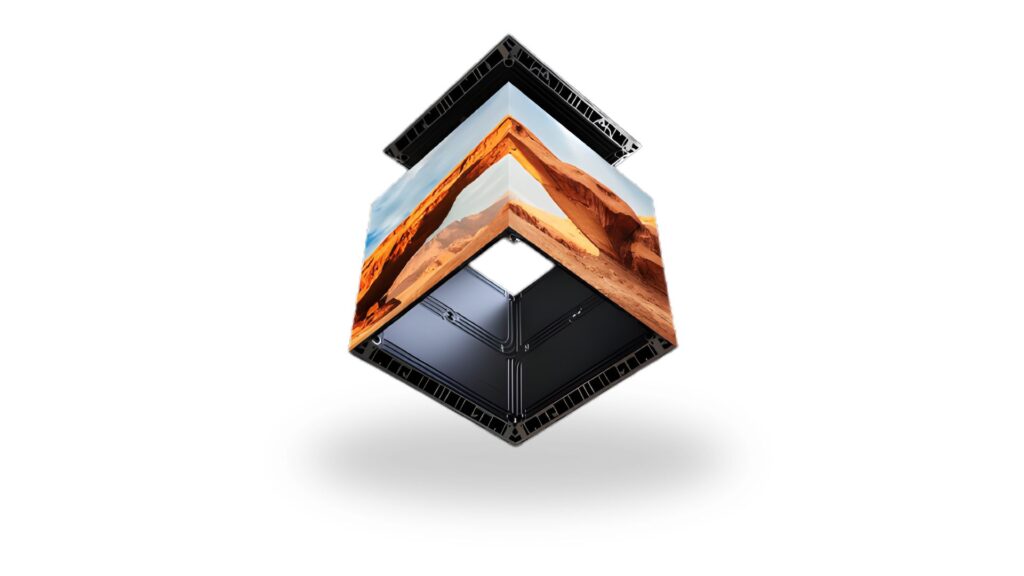
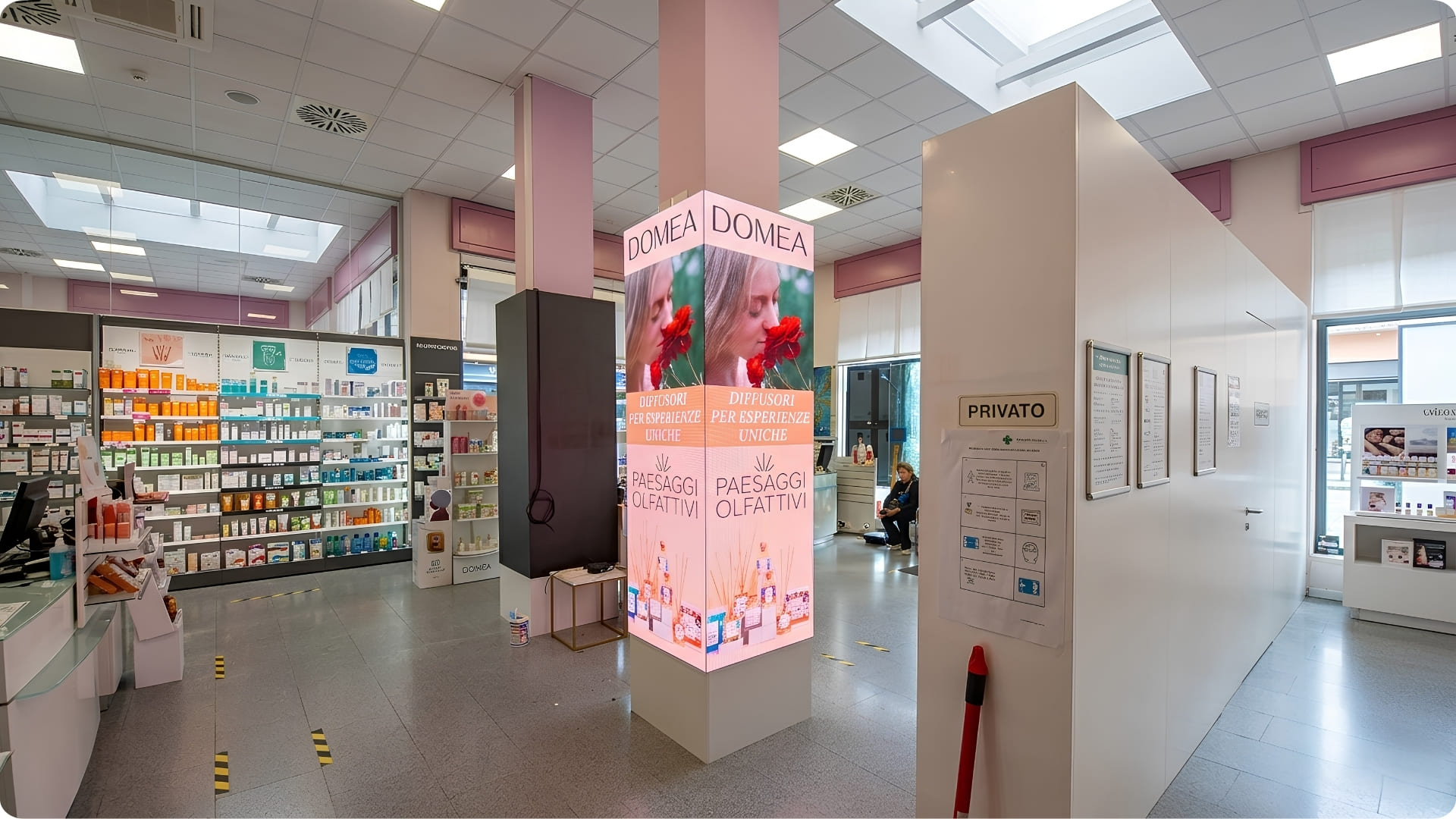
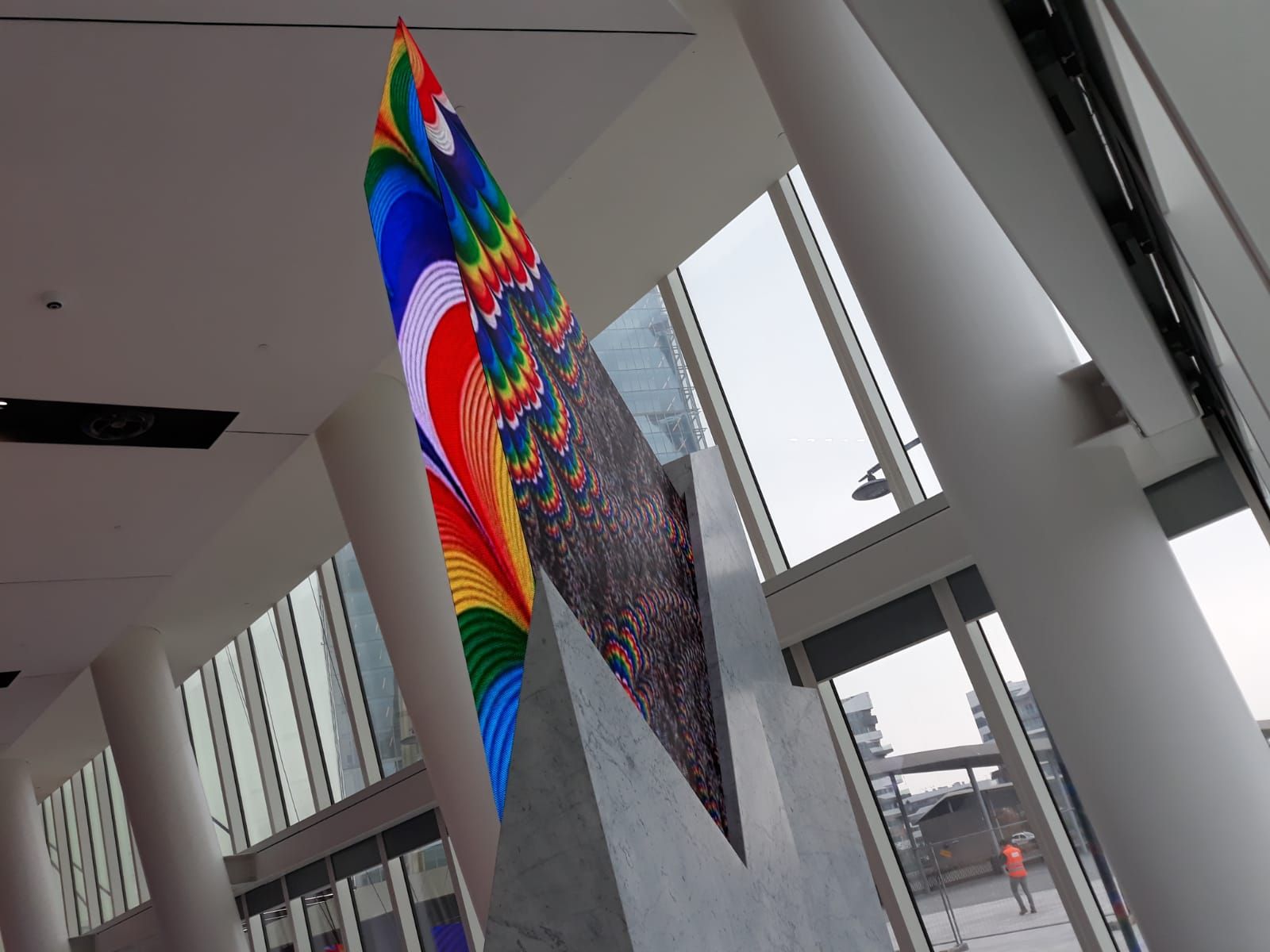
The Mobilis-FT transcends the limitations of traditional flat screens, offering unprecedented design flexibility that makes it perfect for unique architectural spaces like the Eesti Meremuuseum. The system’s modular nature allows for spectacular custom installations that adapt to any creative vision or spatial requirement. Designers can compose screens that wrap seamlessly around corners at 90-degree angles, creating immersive environments that surround visitors rather than simply facing them.
The panels can even form luminous cubic structures, opening possibilities for three-dimensional storytelling that was previously impossible with conventional display technology. Each module comes in various sizes and can be rotated to fit specific spatial configurations, ensuring that architectural constraints never limit creative ambition. Whether installed in historic buildings with irregular layouts or contemporary spaces with bold geometric designs, the Mobilis-FT adapts flawlessly. Key design advantages:
- Corner installations with perfect 90-degree angles
- Customizable panel configurations in multiple dimensions
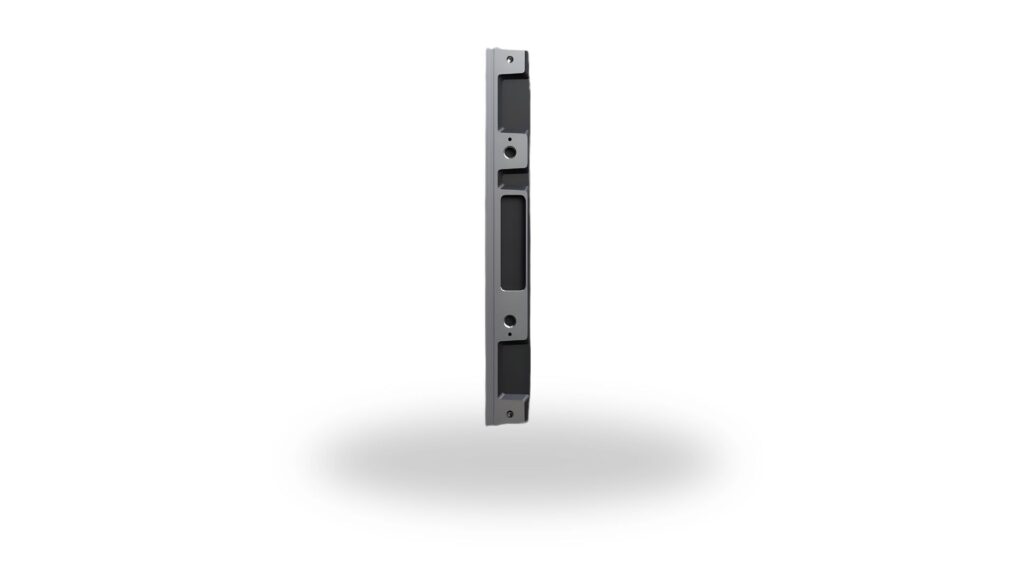
- Ultra-slim 33 mm profile for elegant, unobtrusive integration
- Modular rotation capability for complete spatial adaptability
The remarkably thin 33 mm profile creates what designers call a “flush wall effect”—the screen appears almost like a luminous artwork hanging on the wall rather than bulky equipment. This slim design was essential at the Eesti Meremuuseum, where the LED installation needed to feel organic within the historic hangar environment, complementing rather than overwhelming the architectural heritage.
Simplified installation and maintenance
One of the Mobilis-FT’s greatest strengths lies in its user-friendly approach to both installation and ongoing management, a critical consideration for cultural institutions that may not have dedicated technical teams on-site. The entire system is designed for front-access maintenance, meaning technicians never need to dismantle the installation or access the rear of the display for repairs or adjustments. This front-service capability is particularly valuable in museum settings where displays are often mounted against walls or in positions where back access would be impractical or impossible.
Cable management is completely integrated within the system’s clean design, eliminating the visual clutter of external connections that can detract from the aesthetic impact. This internal cabling approach maintains the installation’s sleek appearance while simplifying the technical infrastructure. Installation versatility offers three distinct mounting options: ceiling suspension, floor-mounted support structures, or direct wall mounting. This flexibility allowed the Macropix team to suspend the LED panels around the Lootsi cog in a way that creates the illusion of the ship floating within a digital ocean, with screens positioned to maximize visitor immersion from multiple viewing angles.
Exceptional visual performance
Despite its emphasis on simplicity and ease of use, the Mobilis-FT delivers professional-grade image quality that meets the demanding standards of cultural and artistic applications. The system features an impressive 160-degree viewing angle, ensuring that images remain clear, vibrant, and color-accurate even when viewed from extreme side positions. In a museum context, this wide viewing angle is essential, visitors approach exhibits from various directions and positions, and the display must maintain visual impact regardless of where someone stands within the space.
Optimized specifically for indoor environments, the Mobilis-FT provides precisely calibrated brightness levels that capture attention without causing viewer fatigue or discomfort. The color reproduction is vivid and true-to-life, crucial for displaying natural environments like the underwater Baltic seascapes at the Eesti Meremuuseum. The 2.6 mm pixel pitch selected for this installation delivers exceptional resolution, allowing for smooth gradients, fine textural details, and fluid motion graphics that create the convincing illusion of swaying seaweed and moving water currents.
This level of detail transforms static exhibition spaces into dynamic storytelling environments that engage modern audiences accustomed to high-quality digital experiences. For institutions in the arts, cultural heritage, hospitality, and experiential design sectors, the Mobilis-FT represents more than just a display technology—it’s a tool for transformation, turning physical spaces into immersive narratives that educate, inspire, and create lasting emotional connections with visitors.